Table of Contents
- How to Choose the Right Type of Distribution Board?
- Which Type of Distribution Board Do I Need?
- How to Choose Distribution Board Capacity and Ways?
- Which Protection Devices Should a Distribution Board Have?
- Indoor, Outdoor, Metal or Plastic Distribution Board?
- What Distribution Board Is Best for My Project?
- Need Help with Distribution Board Products?
How to Choose the Right Type of Distribution Board?
To choose the right distribution board, match the power supply, circuit quantity, load capacity, protection devices, and installation environment.
A distribution board is not selected by size alone. The right type depends on how much power the system needs, how many circuits must be controlled, whether the supply is single-phase or three-phase, and where the board will be installed.
A good distribution board should leave enough space for wiring, support proper circuit protection, and allow safe operation and future maintenance. For real installations, the final selection should also follow local electrical codes and project requirements.
Which Type of Distribution Board Do I Need?
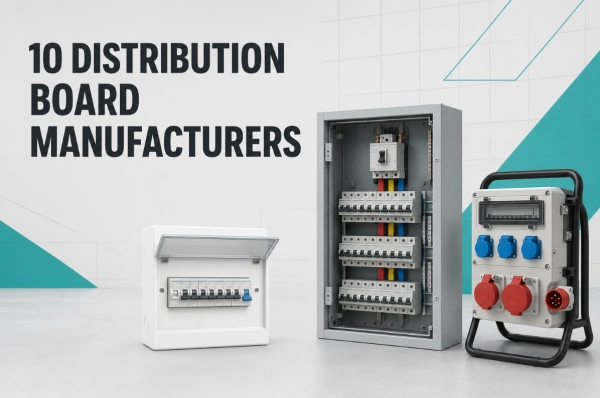
The first step is to match the distribution board with the power supply. Most small residential systems use single-phase boards, while larger buildings and equipment-heavy spaces may need three-phase boards.
| Distribution Board Type | Common Use | Simple Selection Logic |
|---|---|---|
| Single-phase distribution board | Homes, apartments, small offices, small shops | Suitable for low to medium electrical demand. |
| Three-phase distribution board | Commercial spaces, workshops, factories, large buildings | Suitable for heavier loads, machinery, HVAC, or balanced power distribution. |
| Sub-distribution board | Separate floors, zones, rooms, equipment areas | Useful when power needs to be divided into smaller controlled areas. |
How to Choose Distribution Board Capacity and Ways?
Capacity means how much current the distribution board can safely handle. “Ways” means how many outgoing circuits the board can support. Both should match the actual electrical load and leave room for future changes.
Check Total Load
List the main loads, such as lighting, sockets, air conditioners, pumps, machines or special equipment.
Leave Capacity Margin
The board should not run at its limit. A safety margin helps reduce overheating risk and supports later expansion.
Count the Circuits
Separate circuits may be needed for lighting, sockets, HVAC, kitchen loads, outdoor power or machinery.
Reserve Extra Ways
Empty ways are useful for future circuits, upgrades, solar systems, EV charging or new equipment.
As a practical rule, do not choose a board that only fits today’s minimum requirement. A slightly larger distribution board is often easier to wire, inspect and upgrade later.
Which Protection Devices Should a Distribution Board Have?
A distribution board should support the protection devices required by the electrical system. These devices help protect circuits, people and equipment from common electrical faults.
| Protection Device | Main Function | Common Use |
|---|---|---|
| MCB | Protects against overload and short circuit. | Lighting, sockets and general circuits. |
| RCD / RCCB | Detects leakage current and helps reduce electric shock risk. | Bathrooms, outdoor circuits, sockets and higher-safety areas. |
| RCBO | Combines overload, short-circuit and leakage protection. | Individual circuits that need complete protection. |
| SPD | Helps protect against sudden voltage surges. | Buildings with sensitive electronics, outdoor exposure or surge risk. |
Indoor, Outdoor, Metal or Plastic Distribution Board?
The installation environment affects the enclosure type. A board used indoors in a clean room does not need the same enclosure as a board used outdoors, in a workshop or in a dusty area.
| Environment | Suitable Board Direction | Why It Matters |
|---|---|---|
| Indoor residential area | Compact, neat and insulated distribution board | Focuses on safety, appearance and everyday use. |
| Commercial building | Board with clear labeling, enough ways and access control | Makes circuit management and maintenance easier. |
| Workshop or industrial area | Stronger enclosure, often metal or heavy-duty structure | Helps resist impact, dust and tougher operating conditions. |
| Outdoor or humid area | Weatherproof or higher-protection enclosure | Helps protect internal parts from rain, moisture and dust. |
What Distribution Board Is Best for My Project?
The best distribution board is the one that fits the power supply, circuit count, load level, installation environment and required protection devices. There is no single best type for every project.
A simple selection order is: confirm the phase type, calculate the load, count the circuits, choose the enclosure, check protection devices, and reserve space for future expansion.
- For homes or apartments, a single-phase board with enough ways is usually common.
- For shops or offices, choose a board with clear circuit separation and easy maintenance access.
- For factories or workshops, consider three-phase power, stronger enclosures and larger capacity.
- For outdoor or damp areas, choose a board with suitable weather protection.
- For future upgrades, leave spare ways and enough internal wiring space.
Need Help with Distribution Board Products?
Choosing the right distribution board means balancing power supply, load capacity, circuit quantity, safety devices and installation environment. A suitable board should be safe to use, clear to wire and practical for future maintenance.
M&K Distribution Board Support
M&K focuses on distribution boards and related electrical box products for different electrical applications. If you have questions about distribution board type, circuit layout, enclosure selection or product options, you can contact us for further support.