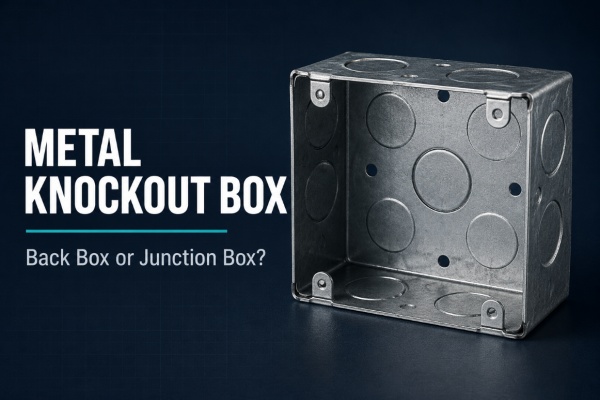
The quality of a metal junction box is evaluated by how well it protects electrical connections, maintains its structure, supports safe installation, resists corrosion, and matches the required enclosure rating or electrical standard. A good metal junction box should not only look clean on the surface. It should also have verified material, accurate dimensions, stable structure, clean knockouts, safe edges, reliable cover fit, proper sealing when required, and suitable protection for its intended environment.
Poor quality may create hidden failure points. A box that looks acceptable at first may later show problems such as warped panels, loose covers, water ingress, rust, sharp burrs, misaligned openings, or failed sealing. In electrical applications, these small defects can affect wiring protection, installation safety, and long-term reliability.
What Does Quality Mean for a Metal Junction Box?
Quality is not just about whether the box looks smooth or heavy. A metal junction box should be checked from four main angles: electrical safety, mechanical strength, environmental protection, and compliance suitability.
The box should safely contain and protect electrical connections under normal installation conditions.
The body, cover, knockouts, and mounting areas should remain stable and not deform easily.
The box should resist dust, rain, moisture, corrosion, or impact when the application requires it.
The box should match the required rating, standard, and installation environment.
Understand the Required Standard or Rating First
Before judging the quality of a metal junction box, the first question is: what environment is it designed for? A box used indoors does not need the same protection as a box exposed to rain, dust, washdown, or corrosive environments.
| Standard / Rating | What It Means | Quality Focus |
|---|---|---|
| NEMA Type 1 | Indoor protection against access to hazardous parts and falling dirt. | Basic structure, cover fit, safe openings. |
| NEMA Type 3R | Indoor or outdoor protection against rain, sleet, snow, and falling dirt. | Rain protection, drainage, outdoor suitability. |
| NEMA Type 4 | Protection against windblown dust, rain, splashing water, and hose-directed water. | Sealing, gasket compression, water resistance. |
| NEMA Type 4X | Similar to Type 4, with additional corrosion protection. | Sealing plus corrosion resistance. |
| IEC 60529 / IP Rating | Classifies protection against dust and water ingress. | Dustproof and waterproof performance. |
| UL 514A | Applies to metallic outlet boxes and related products in North American applications. | Product safety and installation compatibility. |
| NEC Article 314 | Covers installation and use of boxes and conduit bodies in the U.S. | Accessibility, wiring space, box use, and installation compliance. |
Important note: a rating or certificate should match the actual product and application. A general certificate does not automatically mean every metal junction box is suitable for every installation environment.
Check Material Verification
Material is the foundation of metal junction box quality. If the material is wrong, too thin, poorly coated, or inconsistent, later processes such as bending, punching, welding, and sealing cannot fully correct the problem.
Common materials may include galvanized steel, stainless steel, aluminum, or painted steel. The right material depends on the installation environment. For a simple indoor box, stable galvanized steel or painted steel may be suitable. For wet, outdoor, or corrosive environments, stainless steel, aluminum, stronger coating, or a higher enclosure rating may be needed.
• Material type and grade
• Sheet thickness
• Material certificate or specification record
• Surface condition before forming
• Coating or galvanizing quality
• Corrosion resistance requirement
• Consistency between batches
Inspect Dimensions and Tolerances
A metal junction box must be dimensionally accurate. Small deviations can affect cover fit, conduit entry, mounting position, gasket compression, and internal wiring space.
Tools such as calipers, height gauges, depth gauges, and go/no-go gauges may be used to check tolerances. A box with poor dimensional control may still look acceptable from a distance, but it can create installation problems when the cover, conduit, or accessories are fitted.
Check Structural Integrity and Flatness
Structural integrity is one of the most important quality points for a metal junction box. The box body should remain flat, square, and stable after forming, punching, welding, and surface treatment.
Oil canning refers to visible waviness, buckling, or deformation on sheet metal surfaces. It may not always cause immediate failure, but it can reduce structural reliability, affect cover sealing, and make the box look poorly manufactured.
Structural inspection should focus on:
• Flatness of large surfaces
• Squareness of the box body
• Warping after bending or welding
• Deformation around punched holes
• Stiffness of the cover and back panel
• Stability of mounting areas
• Whether the cover can close without forcing
Evaluate Knockout Hole Quality
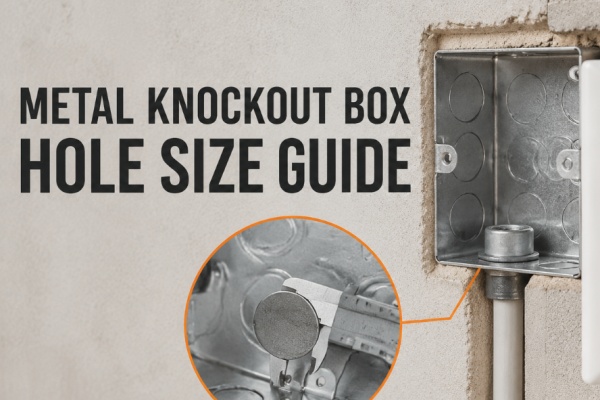
For a metal knock out box, knockout quality directly affects installation. Knockout holes must be correctly positioned, cleanly punched, and easy to remove when needed.
Poor knockout quality may cause conduit entry problems, rough edges, metal deformation, or misalignment during installation. The knockout should be strong enough to stay in place before use, but not so difficult to remove that it damages the box during installation.
• Correct hole size
• Accurate hole position
• Clean punched edge
• No cracks around the hole
• No excessive burrs
• No obvious deformation around the knockout
• Controlled removal without damaging the box body
Check Seams, Welds, and Gasket Sealing
For a basic indoor metal junction box, sealing may not be the main requirement. But for boxes designed for rain, dust, washdown, or corrosive environments, seam and gasket quality becomes critical.
A box with a NEMA 4, NEMA 4X, or certain IP rating must control water and dust ingress. This depends on cover design, gasket compression, seam quality, weld quality, and surface flatness.
• Gasket material and compression
• Uniform contact between cover and box body
• No gaps around the cover
• No coating damage on sealing surfaces
• Clean and continuous seams
• Proper weld quality
• No pinholes or cracks
• Suitable rain, spray, hose, or ingress tests when required
Check Surface Treatment and Corrosion Resistance
Surface treatment is not only about appearance. It affects corrosion resistance, insulation protection, product life, and overall reliability. For corrosion-prone environments, surface treatment should match the required use.
| Surface Problem | Possible Quality Risk |
|---|---|
| Thin or uneven coating | Lower corrosion resistance and shorter service life. |
| Paint peeling | Exposed metal may rust more easily. |
| Scratches near edges or holes | Damage may expand during handling or installation. |
| Incomplete coverage around welds or corners | High-risk areas may corrode earlier. |
| Rust marks | May indicate poor protection, material issue, or storage damage. |
Check Burrs, Edges, and Wire Protection
Sharp burrs are a serious detail in metal junction boxes. Burrs can scratch hands, damage wire insulation, or interfere with installation. A quality metal junction box should have clean edges and safe contact surfaces.
• Knockout holes
• Mounting holes
• Box edges
• Cover edges
• Welded corners
• Cut openings
• Punched slots
Check Performance Testing When Required
Not every metal junction box needs the same test. Testing depends on the intended rating, market, and environment. However, for products that claim higher protection levels, performance testing is more important than appearance alone.
| Test / Inspection | Purpose |
|---|---|
| Visual inspection | Finds scratches, burrs, coating defects, deformation, and assembly issues. |
| Dimensional inspection | Confirms tolerances, cover fit, openings, and mounting accuracy. |
| Rain or water spray test | Checks outdoor or water-resistant enclosure performance. |
| Dust ingress test | Checks dust protection for certain IP or NEMA-rated enclosures. |
| Gasket compression check | Confirms sealing contact between cover and body. |
| Salt spray test | Evaluates relative corrosion resistance of coated or metal surfaces. |
| Grounding / bonding check | Confirms electrical continuity where grounding features are required. |
What Does a Complete Quality Control Process Include?
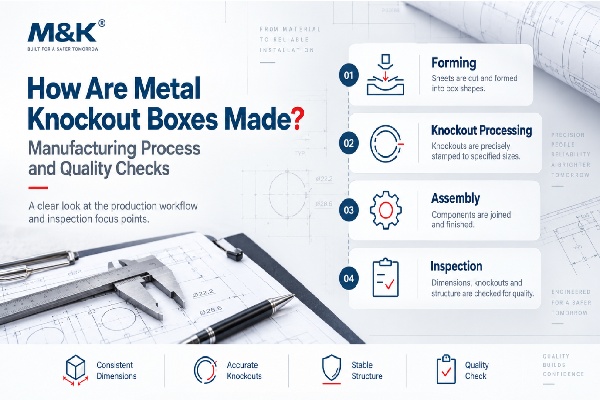
Quality control in metal junction box manufacturing is not a single final inspection. It should cover the whole production process, from raw material checking to packaging inspection.
Raw materials are checked before production, including material type, thickness, coating, certificates, and surface condition.
Inspection is carried out during cutting, punching, bending, welding, surface treatment, and assembly.
Finished boxes are checked for dimensions, cover fit, knockout quality, hole alignment, edge safety, and structure.
If the box has an IP rating, NEMA rating, corrosion requirement, or special use, relevant tests should be performed.
For batch production, sampling inspection may be used to check finished products according to defined quality levels.
Packaging is checked to reduce scratches, deformation, label mistakes, missing accessories, or transport damage.
Common Quality Defects to Avoid
These are the problems that often create hidden failure points. The box may pass a quick visual check, but fail during installation or long-term use.
| Defect | Why It Matters |
|---|---|
| Thin or inconsistent material | May cause weak structure and deformation. |
| Oil canning or warped panels | Affects appearance, cover fit, and sealing reliability. |
| Misaligned cover or holes | Makes installation difficult and reduces enclosure quality. |
| Poor knockout quality | Causes conduit entry problems or rough edges. |
| Sharp burrs | May damage wire insulation or cause handling injury. |
| Weak coating | Increases corrosion risk. |
| Poor welding | May reduce strength or allow water ingress. |
| Uneven gasket compression | Can cause sealing failure. |
| Wrong enclosure rating | The product may not suit the intended environment. |
Simple Checklist for Evaluating a Metal Junction Box
A metal junction box can be evaluated with the following checklist. If these points are well controlled, the box is more likely to provide safe, stable, and long-lasting performance.
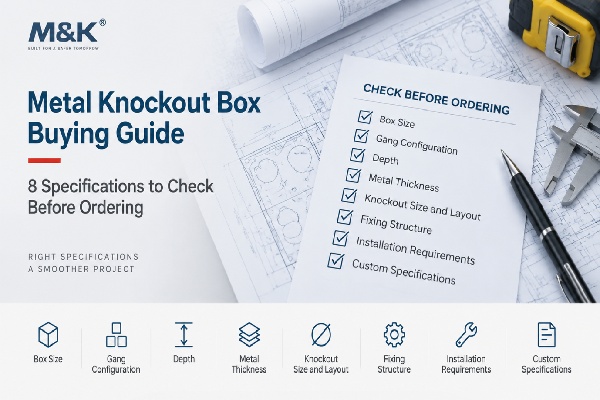
• Is the material type suitable for the environment?
• Is the sheet thickness stable and appropriate?
• Are the dimensions accurate?
• Is the box body square and flat?
• Is there any oil canning or panel warping?
• Are the knockout holes clean and correctly positioned?
• Are there sharp burrs around holes or edges?
• Does the cover fit smoothly?
• Are seams and welds clean and stable?
• Is the gasket compressed evenly, if used?
• Is the surface finish even and corrosion-resistant?
• Does the product match the required NEMA, IP, UL, NEC, or other applicable requirement?
• Are test records or inspection reports available when a rating is claimed?
• Is the packaging strong enough to protect the box before installation?
M&K Metal Junction Box Quality Control
M&K focuses on metal junction boxes and metal knock out boxes for practical electrical applications. Quality control covers material checking, dimensional inspection, knockout accuracy, structural flatness, surface treatment, cover fit, packaging protection, and consistency before shipment.
A reliable metal junction box should not only have a clean appearance. It should protect electrical connections, maintain its structure, support safe installation, and match the required use environment.
If you have questions about metal junction box specifications, knockout design, surface treatment, enclosure rating, or quality control requirements, contact M&K for more information.