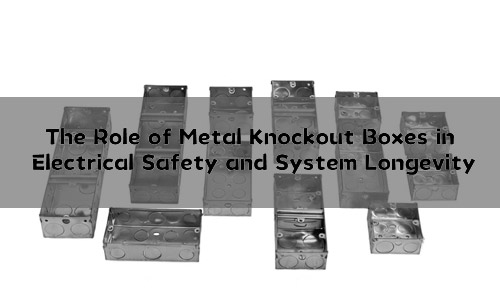
Metal knockout boxes play a crucial role in electrical safety by protecting wiring connections and supporting electrical devices. Beyond mechanical support, they contribute to grounding continuity, heat resistance, and overall system integrity.
In modern installations, selecting the right back box configuration directly impacts both safety compliance and maintenance efficiency.
Grounding and Safety Performance
Metal junction boxes enhance grounding performance by providing a conductive enclosure that can bond with the electrical grounding system. This reduces the risk of fault current hazards and improves overall protection.
Proper earthing is especially critical in commercial and industrial environments.
Heat Dissipation and Cable Protection
Compared to plastic enclosures, metal boxes offer better heat tolerance and mechanical durability. They protect wiring from physical damage and deformation, particularly in high-load circuits.
Deep models such as 46mm back boxes provide additional airflow space for heat dissipation.
Installation Flexibility
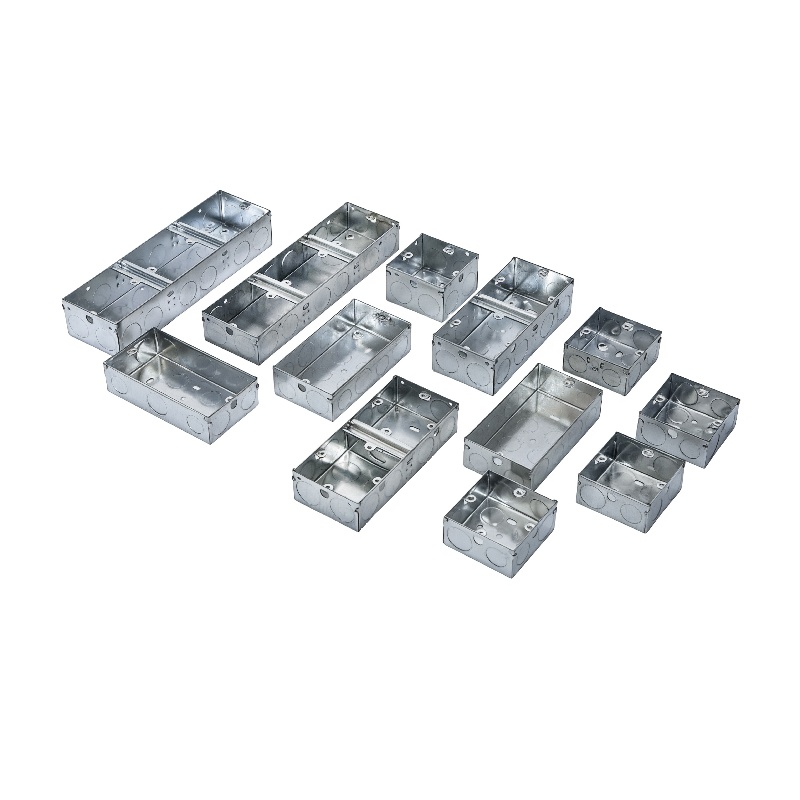
Modern metal junction boxes support various configurations:
-
Multiple gang options
-
Different depth selections
-
Knockout entries for conduit systems
-
Adjustable mounting designs
This flexibility makes them suitable for both renovation and new construction projects.
Common Questions
Are metal junction boxes safer than plastic ones?
Metal boxes provide better mechanical protection and grounding continuity. However, correct installation and earthing practices are essential regardless of material.
How do I reduce wiring congestion inside a back box?
Selecting deeper models such as 35mm or 46mm versions helps manage cable density and simplifies future maintenance.
Can metal knockout boxes be used in concrete walls?
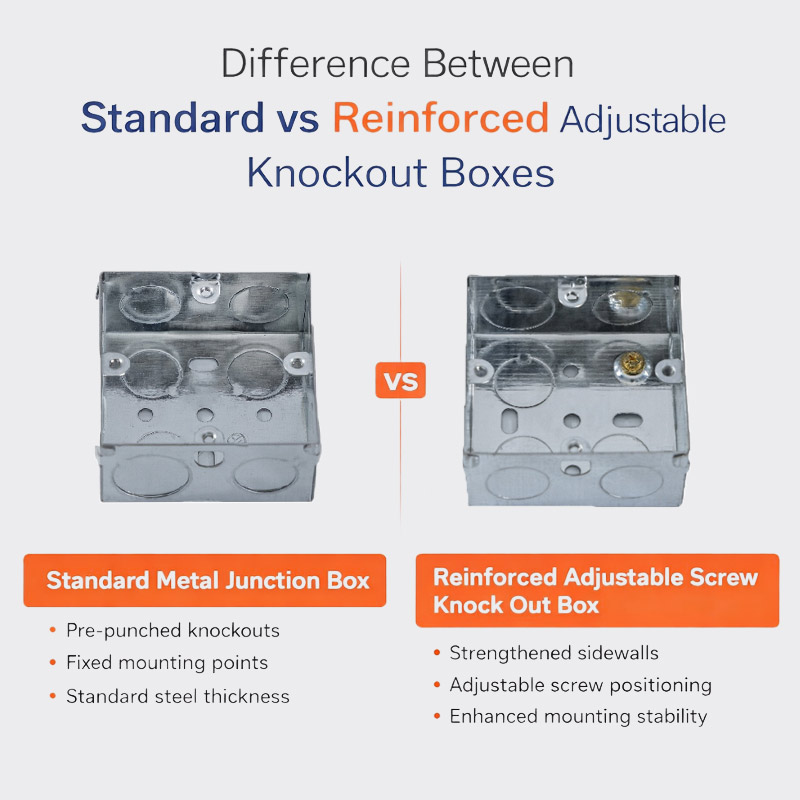
Yes. Reinforced and thick-wall models are specifically designed for concrete embedding and offer improved structural stability.
Conclusion
Metal junction boxes are not just installation accessories; they are critical safety components in any electrical system. Proper sizing, depth selection, and structural quality ensure long-term reliability and compliance.