Table of Contents
- What Is a Metal Junction Box?
- What Is a Metal Junction Box Used For?
- How Does a Metal Junction Box Work?
- Why Are Metal Junction Boxes Important?
- Metal Junction Box vs Plastic Junction Box: What Is the Difference?
- Where Are Metal Junction Boxes Used?
- What Parts Does a Metal Junction Box Have?
- When Should You Use a Metal Junction Box?
- Need Help with Metal Junction Boxes?
What Is a Metal Junction Box?
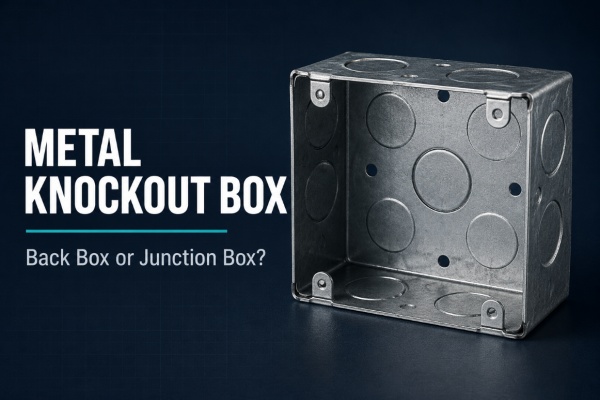
A metal junction box is a protective metal enclosure that safely holds wire connections, keeps cables organized, prevents accidental contact, and helps reduce shock or fire risks.
In an electrical system, wires often need to be connected, extended, or split into different directions. These connections should not be left exposed. A metal junction box gives them a safe place to stay and makes future inspection easier.
In simple words, a metal junction box is the safe meeting point for electrical wires. It keeps wire splices inside a closed metal box instead of leaving them open.
Metal junction boxes are usually made from steel, galvanized steel, aluminum, or stainless steel. Because the box is made of metal, it is strong, heat-resistant, and suitable for places where wiring needs better physical protection.
What Is a Metal Junction Box Used For?
A metal junction box is used when wires need to be connected, protected, and kept accessible. It is often used behind outlets, near lights, along conduit lines, or in places where wiring needs extra protection.
| Use | Simple Explanation |
|---|---|
| Holding wire splices | Keeps connected wires inside a safe enclosure. |
| Protecting wires | Helps prevent wires from being damaged by impact, dust, or heat. |
| Preventing accidental touch | Keeps people from touching live wire connections. |
| Supporting grounding | Can be connected to the grounding system when needed. |
| Making inspection easier | Keeps connections in one place so they can be checked later. |
How Does a Metal Junction Box Work?
A metal junction box works by enclosing electrical wire connections inside a strong metal housing. Wires enter through openings in the box, are connected inside, and are then covered by a metal cover plate.
Why Are Metal Junction Boxes Important?
Metal junction boxes are important because wire connections are common weak points in an electrical system. If a connection is loose, damaged, or exposed, it may cause heat, sparks, electric shock, or circuit failure.
- They keep wire connections inside a closed box.
- They help prevent people from touching live wires.
- They protect wires from impact and external damage.
- They help contain heat or sparks if a wiring fault happens.
- They make future inspection and repair easier.
Metal Junction Box vs Plastic Junction Box: What Is the Difference?
Both metal and plastic junction boxes can be used to protect wire connections, but they are not the same. Metal boxes are stronger and more heat-resistant, while plastic boxes are lighter and do not conduct electricity.
| Item | Metal Junction Box | Plastic Junction Box |
|---|---|---|
| Strength | Stronger and better for exposed areas. | Lighter and easier to handle. |
| Heat resistance | Does not melt like plastic. | May deform under high heat. |
| Grounding | Can support grounding when installed correctly. | Does not conduct electricity. |
| Common use | Garages, workshops, factories, metal conduit systems. | Indoor light-duty wiring and simple installations. |
Where Are Metal Junction Boxes Used?
Metal junction boxes are often used in places where wiring needs stronger protection or where metal conduit is used.
Garages and Basements
Useful for surface-mounted wiring and areas where wires may be exposed.
Workshops and Factories
Suitable for places with machines, vibration, dust, or higher impact risk.
Commercial Buildings
Used in offices, shops, service rooms, and other building wiring systems.
Metal Conduit Systems
Often used together with rigid metal conduit or metal-sheathed cables.
What Parts Does a Metal Junction Box Have?
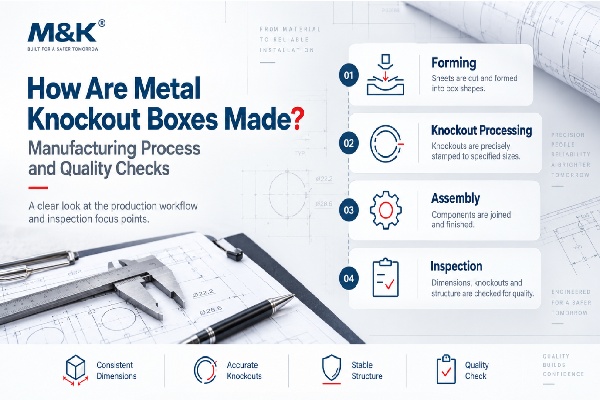
A metal junction box is not complicated. Most boxes include a metal body, cable entry holes, a cover, mounting holes, and sometimes a grounding point.
| Part | What It Does |
|---|---|
| Box body | Holds and protects the wire connections. |
| Knockouts | Allow cables or conduits to enter the box. |
| Cover plate | Closes the box and prevents accidental contact. |
| Mounting holes | Help fix the box to a wall, ceiling, frame, or equipment surface. |
| Grounding point | Allows the box to be bonded to the grounding system when needed. |
When Should You Use a Metal Junction Box?
A metal junction box is a good choice when the wiring needs stronger protection, when the box may be exposed, or when the system uses metal conduit.
- Use it for exposed or surface-mounted wiring.
- Use it with metal conduit or metal-sheathed cable.
- Use it in garages, basements, workshops, and factories.
- Use it where stronger impact protection is needed.
- Use it where heat resistance and fire safety matter more.
For outdoor, wet, dusty, or corrosive locations, the box should also match the environment. Material, sealing, coating, and protection level all matter in these conditions.
Need Help with Metal Junction Boxes?
A metal junction box protects wire connections, keeps wiring organized, supports grounding, and gives electrical connections a safer place to stay. It is especially useful in exposed wiring, metal conduit systems, garages, workshops, factories, and commercial buildings.
M&K Metal Junction Box Support
M&K supplies metal junction box products for different electrical applications. If you still have questions about metal junction boxes, installation use, or product options, you can contact us for further support.