Many metal junction boxes look similar at first glance. They may have a similar shape, similar size, and even similar knockout positions. But in actual use, their performance can be very different. The difference often comes from design details that are easy to overlook in a quick product comparison. This guide explains the common structural features that improve metal junction box performance, and why those details often affect installation quality, durability, and long-term value more than buyers expect.
Price differences between one metal junction box and another are not always caused by raw material alone. Two boxes can both be made of steel, both have knockouts, and both appear acceptable in photos. Yet one may install faster, hold shape better, fit covers more cleanly, and remain more reliable over time. That is because better product design is usually built into the structure itself.
Buyers who understand these structural features can compare products more intelligently. Instead of judging only by thickness, dimensions, or a simple unit price, they can evaluate which design details truly improve performance and which products are better suited for more demanding installations.
Reinforced Ribs
Reinforced ribs are one of the clearest signs that a box has been designed for better structural performance. Instead of using completely flat surfaces everywhere, the manufacturer forms strengthening ribs into the body of the box. These ribs help the box resist bending, twisting, and local deformation.
This matters during installation because junction boxes are not only static storage parts. They are mounted, tightened, connected to conduits, and sometimes adjusted during fitting. A reinforced rib design helps the box keep its shape when pressure is applied. That can improve mounting stability, screw positioning, and even how cleanly the cover fits later.
Smooth Knockout Edges
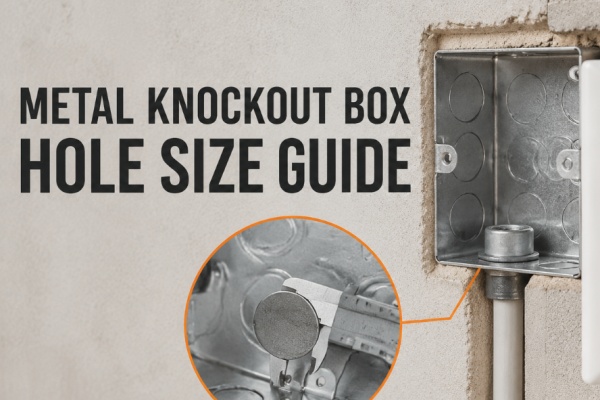
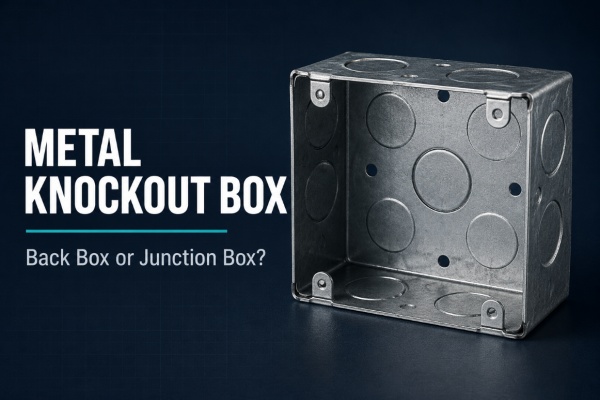
Knockouts are a standard feature, but the quality of the knockout edge makes a bigger difference than many buyers realize. A poorly formed knockout can leave rough edges, irregular break points, or inconsistent opening quality after removal. A better-designed box usually provides cleaner knockout formation and smoother usable edges.
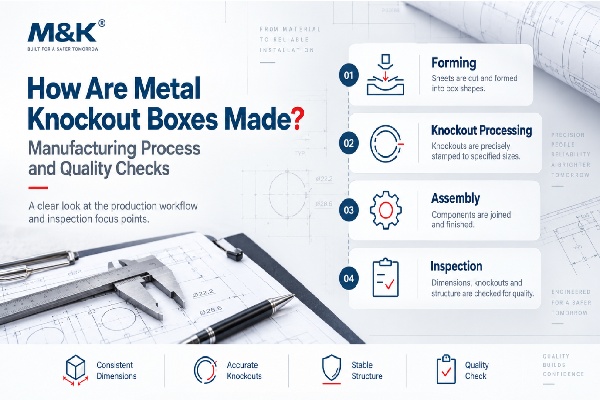
Smooth knockout edges help with installation in several ways. They improve conduit fitting, reduce the chance of awkward finishing work, and support a cleaner overall assembly result. They also reflect better tooling quality. If the knockout area is formed more precisely, it usually means the product has been manufactured with tighter process control overall.
Stronger Screw Holding
Screw holding strength is one of the structural details that strongly influences actual usability. If screw points are weak, poorly formed, or prone to deformation, the box can feel unstable during installation. Covers may not tighten evenly, mounted accessories may not sit securely, and repeated handling may expose weakness sooner.
A better box is usually designed so the screw area has more support, more stable positioning, or stronger local structure. That does not only make the product feel better built. It helps produce more consistent assembly, especially when multiple units are installed across a project and the buyer wants repeatable quality.
Better Dimensional Accuracy
Better dimensional accuracy means the box is produced closer to its intended size and shape, with tighter consistency from unit to unit. This affects far more than measurement on a spec sheet. In real installations, dimensional accuracy influences cover fit, screw alignment, conduit positioning, and how repeatable the installation process feels.
A box with poor dimensional control may still be usable, but it often demands more correction work. Installers may need to adjust covers more carefully, compensate for slight shape variations, or spend more time making components align cleanly. Better dimensional accuracy reduces that uncertainty. For buyers, that often means better project consistency and fewer avoidable complaints.
More Durable Finishes
Finish quality is not only cosmetic. A more durable finish helps protect the box surface during storage, transport, handling, and actual service. Depending on the product design and application, this may include better resistance to surface wear, better corrosion protection, or better visual consistency after installation.
Buyers sometimes compare only the appearance of the finish, but durability is the more important part. A box that looks acceptable in a new catalog photo may not keep the same quality impression after real handling. Better finishes support long-term value because they help the product remain cleaner, more professional-looking, and more reliable in a wider range of conditions.
Easier Cover Fitting
Cover fitting is one of the best indicators of whether a box has been designed and manufactured well. If the box body is stable, the screw areas are reliable, and dimensions are consistent, the cover usually fits more cleanly and with less effort. If one or more of those areas is weak, cover fitting often becomes the place where the problem finally appears.
Easier cover fitting matters because it affects both installation speed and final appearance. A box that accepts the cover smoothly feels more controlled and more professional. It also reduces frustration for installers, especially across repeated installations. For buyers, that translates into a better overall product impression and often a lower hidden cost in labor and adjustment time.
M&K focuses on Metal Junction Box and Metal Knock Out Box solutions with attention to practical structural details, not just basic appearance. If you want to compare product design features, evaluate performance differences, or find a more suitable box for your project, you can contact us for further support.