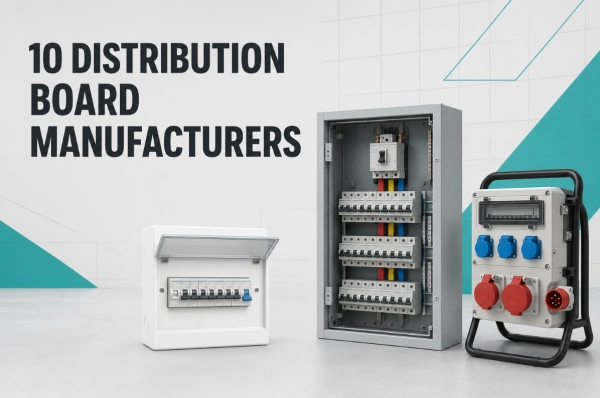
Distribution boards, also called DB boards or electrical panels, can be classified by function, power supply phase, installation method, application environment, and special use. Common types include main distribution boards, sub distribution boards, consumer units, single-phase distribution boards, three-phase distribution boards, TPN distribution boards, surface-mounted boards, flush-mounted boards, indoor boards, outdoor boards, and smart or specialized distribution boards.
The key difference is not only the name. Each type is used for a different power supply condition, circuit quantity, installation location, protection requirement, and load level. A board can also belong to more than one category, such as a three-phase surface-mounted board or an outdoor TPN distribution board.
Main Ways to Classify Distribution Boards
Distribution boards are easier to understand when they are grouped by classification angle. This avoids mixing different ideas such as supply phase, installation method, and application environment into one confusing list.
| Classification Angle | Common Types | Main Difference |
|---|---|---|
| By Function | Main distribution board, sub distribution board, consumer unit | Where the board sits in the electrical system |
| By Supply Phase | Single-phase, three-phase, TPN distribution board | What incoming power system the board supports |
| By Mounting Style | Surface-mounted, flush-mounted | How the board is installed on or inside the wall |
| By Environment | Indoor, outdoor, weatherproof board | What protection level the enclosure needs |
| By Special Use | Smart DB, MCC, generator panel, solar PV board | What special control or energy system it supports |
| By Material | Plastic / PC, ASA, steel, metal enclosure | Strength, safety, durability, and environment suitability |
Distribution Boards by Function
Function-based classification explains the role of the board inside an electrical system. This is often the easiest way to understand where a distribution board is used.
| Type | What It Does | Common Use |
|---|---|---|
| Main Distribution Board | Receives incoming power and distributes it to major circuits or subpanels | Buildings, facilities, workshops, commercial systems |
| Sub Distribution Board | Receives power from the main board and distributes it to a specific area | Garage, floor, office area, workshop zone, detached building |
| Consumer Unit | A smaller distribution board commonly used for residential final circuits | Homes, apartments, villas, small buildings |
Single-Phase Distribution Board
A single-phase distribution board is used with a single-phase electrical supply. It is commonly found in homes, apartments, small shops, small offices, and light commercial spaces.
• Lighting circuits
• Socket circuits
• Small appliances
• Air conditioners
• Water heaters
• General household or light commercial loads
Single-phase boards are often selected by checking the number of ways, such as 4 way, 6 way, 8 way, 12 way, or more. The main focus is circuit quantity, protective device arrangement, wiring space, and installation method.
Three-Phase Distribution Board
A three-phase distribution board is used when the electrical system requires three-phase power. It is more common in commercial buildings, factories, workshops, warehouses, hotels, schools, hospitals, and projects with higher load demand.
Compared with a single-phase board, a three-phase distribution board can support larger and more balanced loads. It may supply three-phase equipment directly or distribute power to several single-phase and three-phase circuits.
TPN Distribution Board
TPN means three phase and neutral. A TPN distribution board is designed for three-phase systems that also require a neutral connection.
• Three-phase power distribution
• Neutral connection
• Mixed single-phase and three-phase circuits
• Better phase organization
• Clearer circuit management in larger systems
TPN boards are common in commercial buildings, offices, hotels, workshops, and project electrical systems where both three-phase loads and single-phase branch circuits may exist.
Surface-Mounted vs Flush-Mounted Distribution Boards
Mounting style describes how the distribution board is installed. This classification does not describe electrical phase. A board can be single-phase or three-phase while also being surface-mounted or flush-mounted.
| Mounting Type | Main Feature | Common Use |
|---|---|---|
| Surface-Mounted Distribution Board | Installed directly on the wall surface | Workshops, utility rooms, renovation projects, industrial areas |
| Flush-Mounted Distribution Board | Recessed into the wall for a cleaner appearance | Homes, apartments, offices, hotels, interior spaces |
Indoor vs Outdoor Distribution Boards
Indoor and outdoor distribution boards are classified by installation environment. Outdoor boards usually need stronger enclosure protection than indoor boards.
| Environment | Board Requirement |
|---|---|
| Indoor | Basic enclosure protection, clean wiring space, suitable cover design |
| Semi-outdoor | Better dust, humidity, and covered-area protection |
| Outdoor | Stronger sealing, corrosion resistance, cable entry protection, suitable IP rating |
Common Components Inside a Distribution Board
Different distribution boards may vary in size and structure, but many of them include similar core components.
| Component | Function |
|---|---|
| Main Switch | Controls the main power supply to the board |
| MCB | Protects individual circuits from overload and short circuit |
| RCCB / RCD | Detects leakage current and helps reduce electric shock risk |
| RCBO | Combines overcurrent and leakage current protection in one device |
| Busbar | Distributes power to multiple circuit breakers |
| Neutral Bar | Provides neutral connection points |
| Earth Bar | Provides grounding connection points |
| DIN Rail | Holds modular protective devices |
Smart and Specialized Distribution Boards
Some distribution boards are designed for special systems or advanced control needs. These boards are not always needed in normal residential or small commercial projects, but they are important in industrial, energy, backup power, and automation systems.
| Specialized Type | Main Use |
|---|---|
| Smart Distribution Board | Energy monitoring, remote control, automation, load management |
| Motor Control Center | Managing and controlling motor loads in industrial plants |
| Generator Panel Board | Power transfer or distribution during backup power use |
| Solar PV Distribution Board | Managing solar power distribution and protection |
| Industrial Distribution Board | Heavy-duty use in factories, machinery areas, and production systems |
Key Differences Between Distribution Board Types
The simplest way to compare distribution boards is to look at what problem each type solves.
| Type | Main Difference |
|---|---|
| Main Distribution Board | Controls and distributes incoming power at a higher level |
| Sub Distribution Board | Supplies a specific area from the main board |
| Consumer Unit | Smaller board for residential final circuits |
| Single-Phase Board | Used for single-phase supply and lighter loads |
| Three-Phase Board | Used for larger loads and three-phase systems |
| TPN Board | Supports three-phase plus neutral distribution |
| Surface-Mounted Board | Easier to install on wall surfaces |
| Flush-Mounted Board | Cleaner appearance, installed inside the wall |
| Outdoor Board | Requires better environmental protection |
How to Choose the Right Distribution Board Type
The right type depends on power supply, load size, circuit quantity, installation environment, and project function. A small home may only need a consumer unit or single-phase distribution board, while a commercial or industrial project may require three-phase, TPN, or specialized distribution boards.
• Is the incoming supply single-phase or three-phase?
• Is the board used as a main board, sub board, or final circuit board?
• How many outgoing circuits are needed?
• Will future expansion be required?
• What protective devices will be installed inside?
• Is the installation surface-mounted or flush-mounted?
• Is the board installed indoors, outdoors, or in a semi-outdoor area?
• Does the project need a consumer unit, TPN board, industrial board, or special-purpose board?
• Does the enclosure material and protection level match the environment?
M&K Distribution Board Support
M&K supplies distribution board products for different low-voltage electrical applications, including single-phase, three-phase, TPN, surface-mounted, flush-mounted, indoor, and project-use solutions.
A suitable distribution board should match the electrical system, circuit quantity, installation environment, protective device layout, and future maintenance needs.
Contact M&K for support with distribution board type, specification, installation option, and product selection.