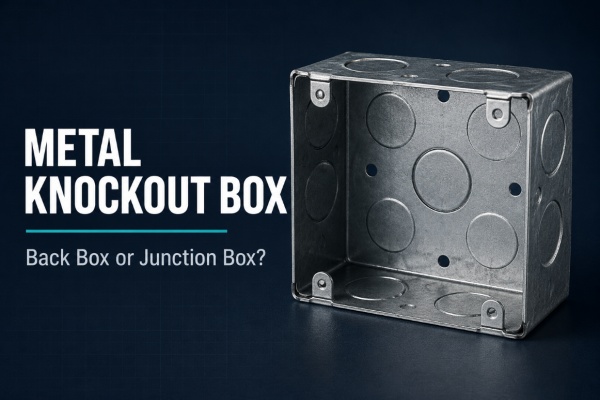
Not every metal knock out box is built for the same level of installation stress. A reinforced knock out box is designed to offer better structural strength, better alignment, and more reliable performance when the installation is more demanding than usual. This article explains what “reinforced” really means, why it matters in practice, and when buyers should consider it over a standard metal junction box.
A reinforced knock out box is not just a normal metal knock out box with a different name. The difference is in how the structure is engineered. Reinforced versions are usually designed to improve body strength, reduce deformation during installation, and keep the box more stable when screws, conduits, covers, and internal wiring all place pressure on the structure. In many projects, that difference may not be obvious at first glance, but it becomes very clear during mounting, alignment, and long-term use.
Reinforced Structure Explained
When manufacturers describe a knock out box as reinforced, they usually mean the box body includes structural improvements that increase stiffness and reduce flex. One common example is a reinforced rib design. Instead of relying only on flat sheet metal walls, the box includes formed ribs, strengthened edges, or support features that make the whole body more resistant to twisting and bending.
This matters because a standard box can sometimes shift slightly when it is being fixed in place, when conduit connectors are tightened, or when accessories are mounted. A reinforced structure helps the box keep its intended shape. That improves not only physical durability, but also installation precision.
Why Rigidity Matters
Rigidity is one of those product differences that buyers do not always notice in a catalog, but installers notice immediately in the field. A more rigid box is easier to position, easier to fasten, and less likely to shift when components are being assembled. That improves installation confidence.
In practical terms, better rigidity helps in three important ways. First, it reduces the chance of box distortion during tightening. Second, it supports better fit between the box and accessories such as covers or mounted devices. Third, it lowers the possibility of small dimensional changes that make the final installation look uneven or feel less secure.
Better Screw Alignment
One of the most practical upgrade points in some reinforced models is adjustable screw positioning or a structure designed for better screw alignment. This may sound like a small detail, but in real installation work it can make a noticeable difference.
When screw positions are more stable and more precise, the box is easier to line up during mounting. That helps installers avoid forcing screws into slightly off-position holes, which can damage the finish, create uneven mounting, or slow down the job. Better screw alignment also improves consistency when the same box type is used repeatedly across a project.
In upgraded designs, reinforcement and alignment work together. A stronger body helps the screw positions stay true. If the surrounding panel flexes less, the screws and mounting points behave more predictably. That is one reason reinforced boxes often feel more “installer-friendly” even when the size is similar to a standard box.
Stability in Demanding Installations
A reinforced knock out box shows its value most clearly when the installation is less forgiving. This can mean heavier conduit use, more handling during assembly, tighter positioning requirements, or environments where a basic box is more likely to be stressed. In these cases, stability is not only about strength. It is also about keeping the installation neat, reliable, and efficient.
When the box remains stable, conduit entry points stay better aligned, the cover sits more evenly, and internal wiring management becomes easier. That improves the working experience for installers and reduces the risk of a box that technically works but feels compromised after assembly.
Suitable Project Scenarios
A reinforced knock out box is not necessary for every project, and that is exactly why this product tier matters. It gives buyers a clear step up from a basic box when the application calls for more than minimum structure. The right question is not “Is reinforced always better?” The right question is “Where does reinforced create real project value?”
In general, reinforced boxes are more suitable when installation quality, stability, and dimensional consistency matter more. That may be because the project is more demanding physically, or because the customer expects a cleaner and more controlled result.
M&K focuses on Metal Junction Box and Metal Knock Out Box solutions, including reinforced designs for projects that need better rigidity, more stable mounting, and clearer product differentiation. If you are reviewing box structure, screw positioning, or selecting between standard and upgraded models, we are ready to help.