Metal junction boxes are not all made from the same material, and that difference is more important than many buyers first expect. Material choice affects corrosion resistance, structural strength, installation environment, appearance, service life, and cost. A box that works well in one project may be the wrong option in another simply because the material does not match the application. This guide explains the most common materials used in metal junction boxes and how buyers can think about them more practically.
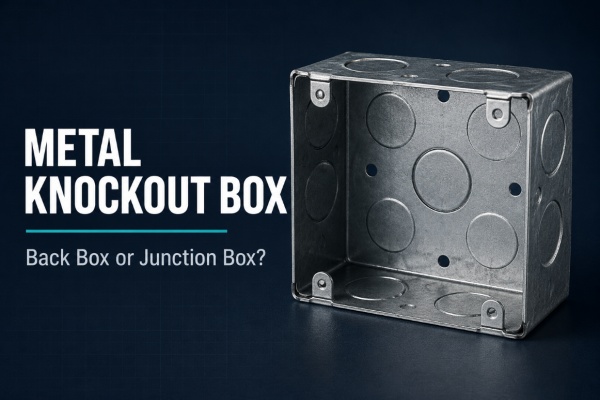
In a metal junction box or metal knock out box, material is not just a manufacturing detail. It helps determine where the box can be used and how well it will perform over time. Some materials are better for general indoor use. Some are better for moisture-prone environments. Some offer stronger corrosion resistance but come at a higher cost. That is why material selection should follow application needs, not just habit or the lowest price.
For most buyers, the goal is not to memorize metallurgy. The practical goal is simpler: understand what each material is generally good at, where it is commonly used, and what trade-offs come with it. Once that is clear, choosing the right box becomes much easier.
Galvanized Steel
Galvanized steel is one of the most common materials used in metal junction boxes. It is essentially steel with a protective zinc coating on the surface. That coating helps improve corrosion resistance compared with untreated steel, which is why galvanized steel boxes are widely used in general electrical installations.
From a buyer’s point of view, galvanized steel is often the most balanced option. It offers good structural strength, good everyday durability, and broad usability in standard indoor and many semi-demanding environments. This is one reason galvanized steel is so popular in commercial and residential projects. It gives buyers a practical combination of performance and cost without pushing the product into a premium price range.
That said, galvanized steel is not automatically the best choice for every environment. If exposure conditions are more aggressive, a higher-corrosion-resistance material may be more suitable. But for general-purpose applications, it is often the default material because it works well across a broad range of common installations.
Stainless Steel
Stainless steel is usually chosen when corrosion resistance is a higher priority. Compared with galvanized steel or mild steel, stainless steel generally performs better in more demanding environments, especially where moisture, chemicals, or harsher exposure conditions may affect the box over time.
Buyers often turn to stainless steel for industrial sites, food-related environments, washdown areas, marine-adjacent applications, or outdoor conditions where long-term surface integrity matters more. It is not usually selected just because it is “better” in a general sense. It is selected because the installation environment gives a clear reason to move up to a more corrosion-resistant material.
The trade-off is cost. Stainless steel boxes are usually more expensive, so they should be chosen where that additional performance actually delivers value. For some projects, they are essential. For others, they may be more than the application really needs.
Mild Steel
Mild steel is a basic steel material often used where the final product will receive additional finishing or coating, or where the application environment is controlled enough that untreated corrosion resistance is not the main concern. It is a practical material from a manufacturing perspective and can be suitable for certain indoor or protected uses.
On its own, mild steel does not offer the same corrosion resistance as galvanized steel or stainless steel. That is why buyers usually need to consider what protective finish will be applied. In other words, mild steel is often not judged only by the base metal itself, but by the full product system including coating, paint, or finish treatment.
In the right project, mild steel can still be a reasonable choice. But it requires clearer thinking about environment and protection level. It is usually more suitable where exposure conditions are controlled and the buyer understands that finish quality is an important part of the performance decision.
Aluminum
Aluminum offers a different balance compared with steel-based materials. One of its biggest advantages is lower weight. This can be useful in applications where easier handling, reduced overall assembly weight, or different installation preferences matter. Aluminum can also be chosen for certain environments where its natural material properties are considered advantageous.
Buyers do not usually choose aluminum simply as a substitute for steel. They choose it when the application benefits from its lighter weight or when the project has a preference for this type of material. In some cases, aluminum may also be selected for aesthetic reasons or product design consistency.
As with all materials, aluminum should be selected based on application fit. It is not automatically the “best” option, but it can be the right one when lighter weight and certain environmental or installation conditions make it more practical.
Material Differences in Cost and Use
Material differences show up not only in technical performance, but also in purchasing logic. A buyer comparing several metal junction box options should expect material choice to affect price. But the right question is not just which material costs less. The better question is which material matches the use environment without paying for performance the project does not need.
For example, stainless steel may cost more, but in a corrosive environment that extra cost can be justified. Galvanized steel may be a strong value choice for standard indoor use. Mild steel may work when finish treatment and environment are both controlled. Aluminum may be worth considering when lighter weight or a different material profile matters. The best choice depends on where the box will be installed, how demanding the conditions are, and what kind of service life the project expects.
This is why material should never be treated as a random selection. It is a practical specification tied directly to cost, application, and long-term reliability.
M&K focuses on Metal Junction Box and Metal Knock Out Box solutions for different applications and project requirements. If you want to compare material options more clearly or find a more suitable box for your installation environment, you can contact us for further support.