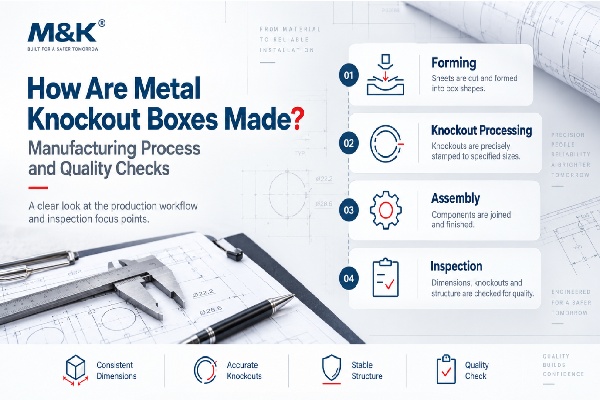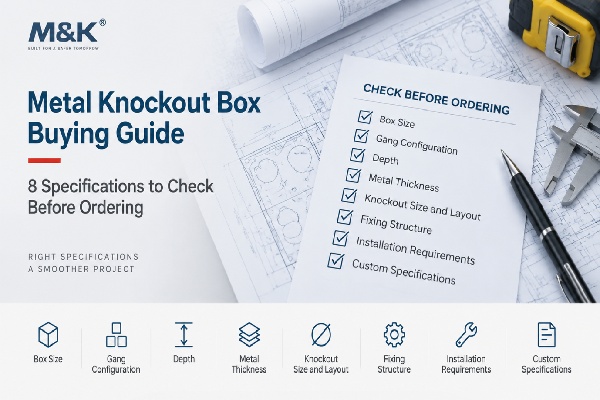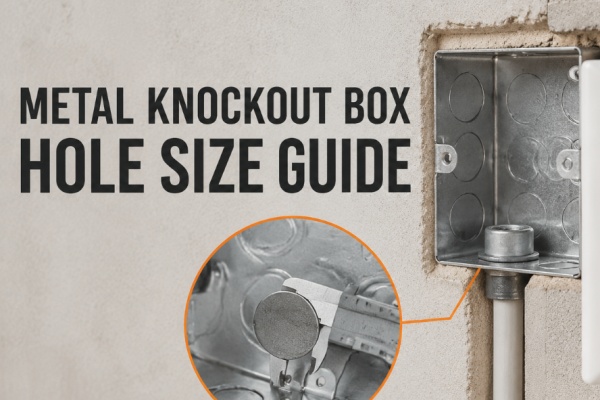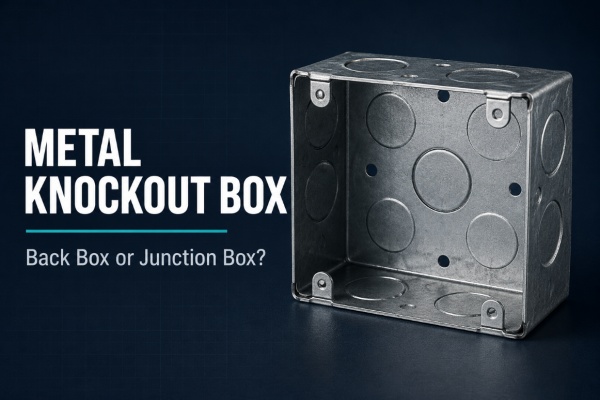
Buyers searching for metal junction boxes often ask the same core questions before they place an order. Some questions are technical, like thickness, size, and material selection. Others are commercial, like bulk order confirmation, outdoor suitability, and manufacturer choice. This FAQ guide brings those high-frequency buyer questions together in one place, so the answers are easier to review quickly and compare before purchasing.
1. Are metal junction boxes better than plastic?
Not in every situation. Metal junction boxes are often preferred where stronger structure, better impact resistance, conduit compatibility, and grounding-related system integration matter more. Plastic boxes can still be useful where lighter weight, non-conductive properties, or corrosion simplicity are stronger priorities.
The better choice depends on the project environment and the installation method. For more demanding commercial or conduit-heavy systems, metal is often the stronger option. For some protected and lighter-duty applications, plastic may still be suitable.
2. Can metal junction boxes rust?
Yes, they can, but rust risk depends mainly on material, finish, and environment. In dry indoor conditions, many metal boxes perform very well for a long time. In humid, coastal, or outdoor-related environments, corrosion risk increases if the material and finish are not matched correctly.
The practical answer is not to avoid metal automatically. It is to choose the right metal and the right protective finish for the project.
3. Can metal junction boxes be used outdoors?
They can, but outdoor use should never be treated the same as indoor use. Outdoor exposure increases pressure on finish, material, and corrosion resistance. Buyers should think more carefully about material selection, finish system, and actual exposure conditions before choosing an outdoor-use box.
In short, outdoor use is possible, but the specification should be more deliberate than for a normal indoor installation.
4. What thickness should I choose?
The right thickness depends on project expectations. Thicker is not always better, and thinner is not always more economical in practice. Thickness affects rigidity, screw stability, handling durability, and cost. Buyers should choose thickness according to installation demands, transport conditions, and overall performance expectations.
The best choice is usually the thickness that fits the application correctly without unnecessary overbuilding or risky under-specification.
5. What size do I need?
Box size should be chosen based on installation function, device count, splice space, conduit planning, and wiring convenience. Buyers should not choose size only by visual judgment. A box that is too small may create crowded wiring and installation difficulty. A box that is too large may increase cost without adding much practical value.
In many cases, buyers should think about both face size and depth, because internal usable space matters as much as outside dimensions.
6. Do I need custom knockouts?
Not always. Standard knockout layouts are often enough for common applications. But if the conduit route is special, if the project has an existing installation standard, or if entry directions are unusual, custom knockouts may create real installation value.
Buyers should request custom knockouts when the standard layout would slow installation, create routing inconvenience, or fail to match the project requirement clearly.
7. Are galvanized boxes enough?
In many ordinary indoor and general-use environments, galvanized boxes are a practical and widely accepted choice. They often give a good balance between corrosion protection, cost, and market practicality.
Whether they are enough depends on the environment. In standard indoor use, often yes. In humid, coastal, or more exposed conditions, buyers may need to think beyond a standard galvanized solution.
8. When is stainless steel worth it?
Stainless steel is usually worth considering when the environment is much more demanding. That often includes stronger moisture exposure, coastal conditions, heavier corrosion concern, or projects where long-term durability is more important than the lowest upfront cost.
It is not always necessary for general applications, but it becomes more valuable when the environment makes standard material options less reliable over time.
9. What should I confirm before bulk ordering?
Before a bulk order, buyers should confirm material, thickness, dimensions, knockout positions, finish, packaging method, drawing or sample approval, and shipment details. Most large-order problems come from unclear confirmation rather than from the product category itself.
A bulk order should be treated as a specification-controlled B2B transaction, not as a simple reorder from a product photo.
10. How do I choose a manufacturer?
Buyers should look beyond catalog appearance and ask practical questions: does the manufacturer understand the product clearly, support stable production, control quality in a structured way, communicate efficiently, and manage delivery consistently? A good manufacturer should make the order easier to understand and easier to repeat.
Reliable manufacturers usually show strength in factory capability, product range, customization clarity, QC logic, export experience, and repeat-order stability.
M&K focuses on Metal Junction Box and Metal Knock Out Box solutions for wholesale, project supply, and repeat-order business. If you want to discuss product selection, customization, bulk ordering, or manufacturer support in more detail, please contact us.