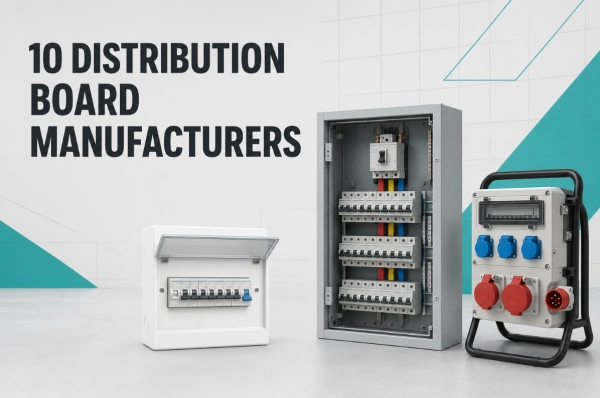
Consumer unit and distribution board are closely related terms, but they are not always used in the same way. A consumer unit is usually a specific type of distribution board used for final circuit protection in residential or light commercial electrical systems. A distribution board is a broader term that can include consumer units, single phase boards, three phase boards, TPN boards, sub-distribution boards, and project-type electrical panels.
The simple way to understand the relationship is this: all consumer units are distribution boards, but not all distribution boards are consumer units. This distinction is useful for buyers because the correct term affects product selection, search keywords, quotation communication, and whether the product matches the installation environment.
Usually refers to a compact final distribution board for homes, apartments, villas, small shops, or light commercial spaces.
A wider product term for boards that receive power and distribute it to different outgoing circuits.
Consumer unit is more specific; distribution board is broader and can cover both residential and project applications.
What a consumer unit usually means
A consumer unit usually means a compact electrical distribution enclosure used near the final circuits of a building. It is commonly installed in homes, apartments, villas, small offices, shops, and similar low-voltage electrical applications. Its main function is to distribute power to different final circuits and provide space for protective devices.
In practical use, a consumer unit may supply lighting circuits, socket circuits, kitchen circuits, bathroom circuits, air-conditioning circuits, water heater circuits, or other household and light commercial loads. It often includes a main switch, MCBs, RCCBs, RCBOs, neutral terminals, earth terminals, DIN rail, busbar, and a protective cover or enclosure.
• Number of ways, such as 4 way, 6 way, 8 way, 12 way, or more
• Single phase supply requirement
• Main switch, RCD, RCCB, RCBO, or MCB arrangement
• Surface-mounted or flush-mounted installation
• Enclosure material, cover design, wiring space, and terminal layout
Because a consumer unit is often used in final distribution, buyers usually care about installation convenience, clear circuit labeling, easy operation, safe wiring space, and compatibility with common modular protection devices.
Why all consumer units are distribution boards
A consumer unit is a distribution board because it performs the same basic distribution function: it receives incoming power and divides that power into multiple outgoing circuits. Each outgoing circuit is connected to a specific area or electrical load, and each circuit can be protected by suitable devices.
The reason people use a separate name is that “consumer unit” usually points to a smaller, final-use product category. It is not normally used to describe large three phase distribution boards, main distribution boards, industrial power panels, or high-capacity project boards.
| Point of comparison | Consumer unit | Distribution board |
|---|---|---|
| Meaning | A specific final distribution board for residential or light commercial use. | A broad term for boards used to distribute electrical power to circuits. |
| Common system level | Final circuits close to daily electrical loads. | Main distribution, sub-distribution, final distribution, or project distribution. |
| Typical phase type | Usually single phase, depending on market and design. | Can be single phase, three phase, TPN, or other project configurations. |
| Typical buyer intent | Household, small shop, apartment, or light commercial final circuit protection. | Wider project needs, including residential, commercial, industrial, and infrastructure applications. |
Where the difference matters
The difference between consumer unit and distribution board matters when buyers compare products, request quotations, or search online. If the wrong term is used, the buyer may receive products that are too small, too large, or not suitable for the required electrical system.
For example, a buyer looking for a compact board for apartment circuits may use “consumer unit.” A contractor working on a commercial building may use “distribution board” because the project may include larger boards, three phase boards, or sub-distribution boards. Both are related, but the expected product range is different.
“Consumer unit” usually brings more residential or small building intent, while “distribution board” covers a wider product range.
The term should match the phase, circuit quantity, rated current, enclosure design, and installation environment.
Clear wording helps suppliers understand whether the buyer needs a household unit, single phase board, or larger project board.
If the product is for final circuits in a home or small shop, “consumer unit” may be accurate. If the product category includes more sizes, phases, and applications, “distribution board” is usually the safer and broader term.
Residential vs broader project usage
The most practical difference is application scope. A consumer unit is usually linked to residential and light commercial final distribution. A distribution board can be used in residential, commercial, industrial, and project electrical systems. This broader meaning makes “distribution board” more flexible for category pages and general product explanations.
In a residential building, a consumer unit may be enough to manage the main final circuits. In a commercial building or industrial project, the electrical system may require main distribution boards, sub-distribution boards, three phase distribution boards, TPN boards, or specialized panel arrangements.
| Application | More common term | Reason |
|---|---|---|
| Apartment or villa final circuits | Consumer unit / single phase distribution board | The product is usually compact and focused on final circuit protection. |
| Small shop or small office | Consumer unit / distribution board | Both terms may be used, depending on market wording and product configuration. |
| Commercial building | Distribution board / panel board | The project may require larger capacity, more circuits, or three phase distribution. |
| Industrial or project site | Three phase distribution board / TPN distribution board / distribution panel board | The system usually has higher load requirements and more complex distribution levels. |
How to use the right term when buying
When buying or sourcing electrical distribution products, it is better to use the product term together with key specifications. This prevents confusion and helps the supplier understand the actual requirement faster.
Instead of asking only for a consumer unit or distribution board, buyers can describe the phase type, number of ways, rated current, enclosure style, protection device arrangement, and installation environment. This creates a clearer inquiry and reduces the risk of receiving mismatched product recommendations.
“We need a single phase consumer unit, 8 way, surface mounted, suitable for MCB and RCCB installation.”
“We need a three phase distribution board for a commercial project, with suitable outgoing circuit arrangement.”
Use “consumer unit” for compact final distribution products and “distribution board” for a wider category range.
In short, consumer unit and distribution board are not completely separate product ideas. A consumer unit is a specific type of distribution board, mainly used for residential and light commercial final circuits. Distribution board is the broader term and can cover more product types, system levels, and project applications.
M&K supplies distribution board products for different low-voltage electrical applications, including single-phase consumer units and broader distribution board solutions for residential, commercial, and project use. If you have questions about specifications, product selection, or purchasing options, you can contact us for further support.