MK-ELE serves building OEMs; KDM handles custom sheet metal; nVent HOFFMAN, Rittal, Hammond, Eaton, Wiegmann, Bud, Nema Enclosures and Adalet cover industrial lines.
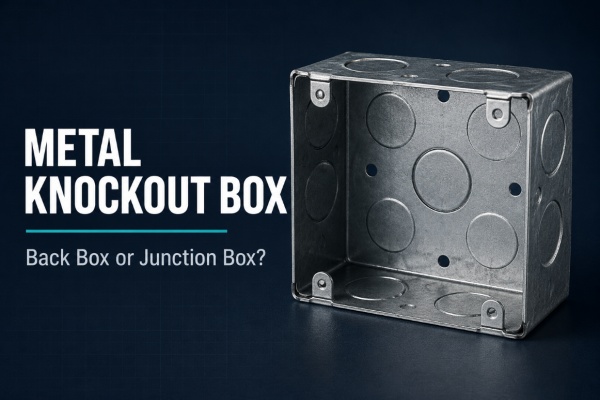
The term metal junction box covers two different sourcing needs. In building wiring, it often means a compact steel box installed behind a switch or socket, with conduit entries, knockouts and one-gang or multi-gang configurations. In industrial projects, it usually means a sealed metal enclosure that protects terminals, instruments or controls from dust, water, corrosion or hazardous conditions.
That distinction matters more than brand size. A buyer sourcing concealed-wall back boxes should compare box depth, steel thickness, knockouts and mounting structure. A buyer sourcing a factory enclosure should begin with environmental rating, material, certification, cover design and internal mounting requirements.
Quick Manufacturer Match
Building wiring boxes and configurable gang options: MK-ELE
Broad global industrial enclosure ranges: nVent HOFFMAN, Rittal, Hammond, Eaton and Wiegmann
Catalog products with short-turn modifications: Bud Industries
Custom NEMA-style or sheet-metal fabrication: Nema Enclosures and KDM Steel
Hazardous and rugged industrial locations: Adalet
Selection note: This is a buyer-oriented shortlist, not an audited sales or market-share ranking. The order reflects product relevance, range breadth, specification support, customization and usefulness for different purchasing scenarios. Confirm current ratings, approvals and delivery terms with each manufacturer before ordering.
1. MK-ELE (M&K)
Country: China
Website: www.mk-ele.com
MK-ELE focuses on compact metal boxes for switch mounting, socket mounting, conduit entry, branch wiring and concealed-wall installation. Its range includes standard metal junction boxes, reinforced knockout boxes, 35 mm and 46 mm connecting-rod boxes, and four-square boxes with brass standoffs.
Notable range: Depending on the model, buyers can discuss 0.5 mm to 1.0 mm thicknesses, one-gang through multi-gang layouts, standard or reinforced structures, lift studs, movable ears and connecting rods.
Buyer fit: Importers, electrical wholesalers, project suppliers and private-label buyers seeking building-installation boxes with configurable structures, labels and packaging.
2. nVent HOFFMAN
Country: United States / Global
Website: www.nvent.com/hoffman
nVent HOFFMAN is a major industrial enclosure brand with mild-steel and stainless-steel terminal and junction boxes for factories, controls and infrastructure. Its portfolio is designed around environmental protection, dependable sealing and integration with enclosure accessories.
Notable range: Screw-cover, clamp-cover and hinged designs; mild and stainless steel options; corrosion-resistant products; mounting panels and accessories for industrial assembly.
Buyer fit: Global OEMs, panel builders and engineering teams that need established industrial product families, documentation and regional supply support.
3. Rittal
Country: Germany
Website: www.rittal.com
Rittal supplies junction and terminal boxes as part of a wider enclosure system. Its small-enclosure portfolio includes carbon-steel terminal boxes, stainless-steel options and aluminum housings for electrical components and compact control applications.
Notable range: KX small enclosures, junction and terminal formats, accessories for cable entry and internal installation, and selected products with protection categories up to IP66.
Buyer fit: Machinery builders and industrial plants that value a coordinated enclosure ecosystem, repeatable specifications and internationally available accessories.
4. Hammond Manufacturing
Country: Canada
Website: www.hammfg.com
Hammond Manufacturing offers a deep selection of commercial and industrial junction boxes in mild steel, stainless steel and aluminum. Product pages typically provide dimensions, drawings, certification references and alternate-material paths that simplify specification work.
Notable range: General-purpose Type 1 boxes, rain-resistant Type 3R products, gasketed mild-steel boxes, and Type 4X stainless-steel or aluminum designs for wet and corrosive environments.
Buyer fit: Engineers, distributors and panel shops that want a broad catalog, accessible technical data and multiple material choices without starting from a fully custom design.
5. Eaton
Country: Ireland / Global
Website: www.eaton.com
Eaton provides standard, modified and large enclosure solutions through product families serving commercial, industrial and classified applications. Its junction-box offering is relevant to oil and gas, mining, water and wastewater, and OEM panel-shop projects.
Notable range: B-Line series enclosures, modified enclosure services, large enclosure systems and options for general industrial or more demanding locations.
Buyer fit: Contractors, utilities and industrial buyers that prefer a large electrical supplier with related power-management products and established distribution channels.
6. Hubbell Wiegmann
Country: United States
Website: www.hubbell.com/wiegmann
Wiegmann, a Hubbell brand, manufactures electrical and electronic enclosures used to protect junctions, switches and control components. Its range is especially visible through North American electrical distribution.
Notable range: Screw-cover wiring and junction boxes, hinged wall-mount enclosures, industrial cabinet formats and accessories for standard electrical installations.
Buyer fit: North American contractors, distributors, OEMs and maintenance teams sourcing familiar enclosure formats through established channels.
7. Bud Industries
Country: United States
Website: www.budind.com
Bud Industries combines compact catalog enclosures with modification services. Its metal range includes NEMA 1 steel junction boxes, hinged steel boxes, Type 3R metal boxes and die-cast aluminum enclosures, alongside non-metallic alternatives.
Notable range: Knockout and no-knockout models, screw-down or hinged covers, mounting options, stock visibility and short-turn cutout modifications on many stocked enclosures.
Buyer fit: Design engineers, automation builders and lower-volume programs that need catalog availability plus practical machining or cutout changes.
8. Nema Enclosures
Country: United States
Website: www.nemaenclosures.com
Nema Enclosures manufactures standard and custom junction-box enclosures in powder-coated carbon steel, 304 or 316 stainless steel and 5052 aluminum. Hinged and perimeter-clamp configurations address water- and dust-sealing requirements.
Notable range: Standard gasketed junction boxes, multiple material choices, custom holes and accessories, grounding provisions, panels and builds designed around project specifications and certifications.
Buyer fit: Industrial projects that need a U.S.-made custom enclosure, material flexibility or an application-specific configuration beyond a standard catalog box.
9. Adalet
Country: United States
Website: www.adalet.com
Adalet specializes in explosionproof, hazardous-location and rugged industrial enclosure solutions. Its range includes empty or populated junction boxes, stainless-steel enclosures, increased-safety terminal boxes and custom configurations.
Notable range: Hazardous-location products, Type 304 and 316L stainless-steel options, NEMA-rated enclosures and products intended for corrosive, wet or demanding process environments.
Buyer fit: Oil and gas, chemical, food processing and heavy-industry projects where location classification and approval documentation must be evaluated before price.
10. KDM Steel
Country: China
Website: www.kdmsteel.com
KDM Steel focuses on sheet-metal electrical enclosure manufacturing and custom junction boxes. Its published range covers carbon steel, painted mild steel, 304 stainless steel and 316 stainless steel, with other materials discussed by project.
Notable range: Rectangular waterproof boxes, telecom-oriented enclosures, custom cable-entry cutouts, DIN-rail provisions and fabricated designs based on drawings or application requirements.
Buyer fit: Equipment manufacturers and importers seeking drawing-based sheet-metal fabrication, broader dimensional customization or production sourcing from China.
How to Choose a Metal Junction Box Manufacturer
1. Define the box category before requesting a quote
State whether you need a switch or socket back box, a general-purpose wiring box, a pull box, a terminal enclosure or a sealed industrial enclosure. These products may share a keyword but use different construction methods, standards and supplier channels.
2. Match the metal to the environment
Galvanized or coated steel is common for economical indoor installations. Powder-coated carbon steel suits many industrial interiors. Stainless steel is appropriate where corrosion, washdown or hygiene matters, while aluminum offers lower weight and natural corrosion resistance. Specify the exact grade when it affects service life.
3. Treat ratings and certifications as application requirements
Do not select a box only because a catalog mentions NEMA, IP, UL, IEC, ATEX or another standard. Identify the required rating for the installed configuration and sales market, then ask for the relevant report, listing, file number or declaration for the exact model. Cutouts, cable glands and modifications can affect the final assembly.
4. Send a complete dimensional specification
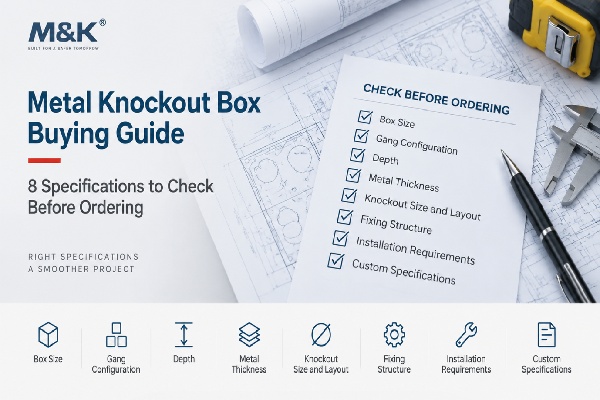
An effective RFQ should include external dimensions, usable internal depth, steel thickness, cover style, knockout or cable-entry pattern, gang count, mounting holes, studs, brackets, connecting rods, internal panel or DIN rail, finish, quantity and packaging. Add drawings or reference photos when the structure is not standard.
5. Compare total sourcing risk, not unit price alone
Review sample approval, tooling charges, minimum order quantity, repeat-order consistency, drawing control, inspection records, packing method, lead time and change management. For custom boxes, agree on the approved drawing and tolerance before production.
Frequently Asked Questions
What is a metal junction box?
It is a metal enclosure that contains and protects electrical wire connections, terminals or small components. The term may refer to a compact building-wiring box or a larger industrial enclosure, so the intended installation should always be stated.
Which is better: steel, stainless steel or aluminum?
There is no universal best material. Coated steel is economical and strong, stainless steel is preferred for corrosion and washdown resistance, and aluminum reduces weight while resisting corrosion. The correct choice depends on location, chemicals, moisture, impact risk, grounding and cost.
Can a manufacturer customize knockouts and mounting features?
Many manufacturers can add cable-entry holes, knockouts, studs, brackets, panels, DIN rails, labels or special finishes. Capabilities and minimum quantities differ, so submit a controlled drawing and ask which changes are covered by the quoted certification or rating.
What should be included in a junction-box RFQ?
Include the application, material and grade, dimensions, thickness, cover and gasket, environmental rating, approvals, entry-hole layout, mounting details, internal hardware, finish, annual volume, first-order quantity, delivery destination and required documents.
Source Metal Junction Boxes for Building Projects
MK-ELE supplies standard, reinforced, connecting-rod and four-square metal boxes for switch, socket and conduit installations. Send the required box type, gang count, dimensions, thickness, quantity and packaging details for model confirmation.
For standard and configurable building-wiring products, review MK-ELE as a metal junction box manufacturer. Always verify the final product specification and local electrical-code suitability before purchase or installation.