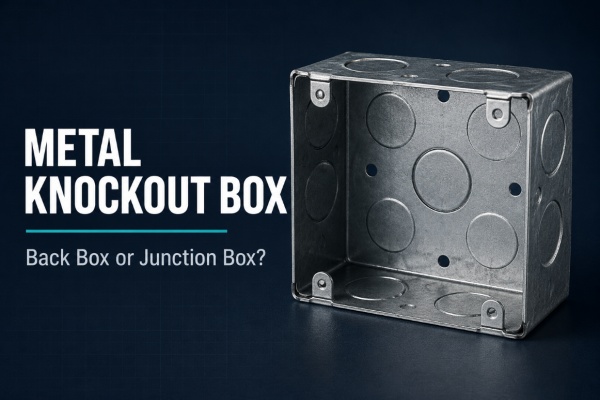
You can first review M&K’s existing metal knockout box range and then compare the required specifications with the available models.
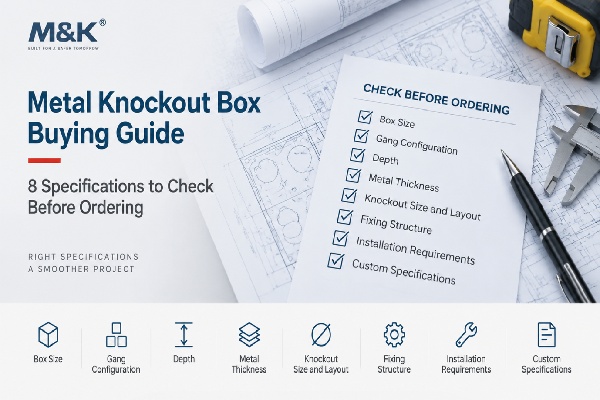
1. Check the Metal Knockout Box Size
Start with the overall width, height and depth of the box. These dimensions affect the wall opening, device fit and available wiring space.
Do not select a metal electrical box only by appearance or product name. Two boxes may look similar but differ in dimensions, fixing positions or internal space.
- Width: affects the overall device layout, especially for multi-gang boxes.
- Height: should match the required wall opening and accessory format.
- Depth: determines how much space is available behind the switch or socket.
2. Choose the Right Gang Configuration
Metal knockout boxes are available in different gang configurations, including 1 gang, 2 gang, 3 gang, 4 gang and wider multi-gang designs.
The gang number generally refers to the number of device positions provided by the box. It does not mean the number of knockouts.
When selecting a wider box, also check whether the design includes additional reinforcement or a center support structure to maintain the required box shape and fixing arrangement.
3. Select the Appropriate Metal Knockout Box Depth
Box depth affects the space available for wiring, cable bends, connectors and the rear section of the installed device. A deeper box provides more internal space, but it is not automatically the better choice.
Before choosing the depth, check:
- The depth of the switch or socket.
- The space required for conductors and cable bends.
- The projection of conduit connectors or fittings.
- The available wall cavity.
M&K offers different depth configurations, including 35mm and 46mm options in selected models, so the box depth can be matched to the actual installation requirement.
4. Confirm the Metal Thickness
Metal thickness affects the rigidity and overall structure of the knockout box. M&K’s current product range includes thickness options from 0.5mm to 1.0mm for applicable models.
The required thickness should be selected according to the product structure, box size and project specification. A thicker box is not necessary for every installation.
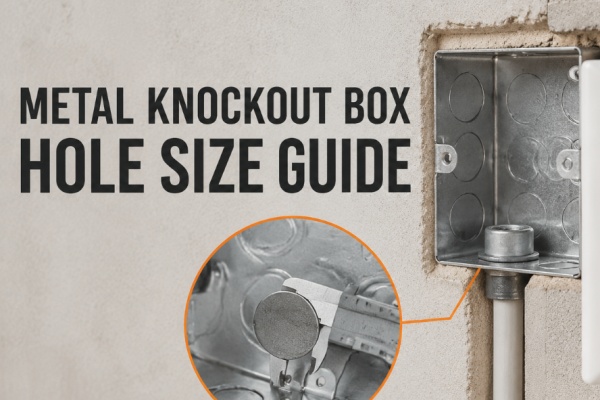
5. Check Knockout Size, Quantity and Position
The knockout layout is one of the most important specifications of a metal knockout box. Confirm the opening size, number of knockouts and their positions before ordering.
- Knockout size: should match the required conduit connector, cable gland or fitting.
- Knockout quantity: should provide enough cable or conduit entry points.
- Knockout position: should match the planned wiring direction.
- Knockout spacing: should leave enough room for adjacent fittings and installation tools.
Do not choose the knockout only according to cable diameter. The required opening is usually determined by the fitting that passes through the box wall.
For more detail, see How to Match Knockouts, Conduit and Fittings .
6. Compare the Fixing Structure
Similar-sized boxes can use different internal fixing structures. This affects how the switch or socket is installed and how the box performs in wider configurations.
M&K’s current metal knockout box range includes several structure options:
7. Match the Box to the Installation
A metal knockout box should be selected as part of the complete installation rather than as a separate component. Check how the box works with the switch, socket, conduit and surrounding wall structure.
- Is the box deep enough for the installed device and wiring?
- Are the knockouts positioned in the correct direction?
- Do the openings match the required conduit fittings?
- Does the fixing structure match the switch or socket?
- Is there enough internal space for wiring and connections?
These checks are especially important when replacing an existing electrical box or matching a specified project drawing.
8. Confirm Custom Metal Knockout Box Requirements
If an existing model does not match the required specification, confirm the custom requirements before production. These may include:
- Box dimensions and depth.
- Gang configuration.
- Metal thickness.
- Knockout size and layout.
- Fixing or support structure.
- Logo and labeling.
- Packaging requirements.
A drawing, dimensional sheet or physical sample can make specification confirmation much clearer, especially when the required box differs from standard models.
What Should You Confirm Before Ordering a Metal Knockout Box?
Before placing an order, confirm the box dimensions, gang, depth, thickness, knockout layout, fixing structure and installation requirements. If the standard product does not match the project, provide a drawing or sample for comparison.
You can browse M&K’s metal knockout box products to compare available depths, thicknesses, gang configurations and fixing structures.
Frequently Asked Questions
What sizes do metal knockout boxes come in?
Metal knockout boxes are available in different widths, heights, depths and gang configurations. The correct size depends on the installed electrical accessory, wiring space and wall structure.
What does gang mean on a metal knockout box?
Gang generally refers to the number of device positions in the box, such as 1 gang, 2 gang or 4 gang. It does not refer to the number of knockouts.
Is a deeper metal knockout box better?
Not always. A deeper box provides more wiring space, but the correct depth depends on the device, fittings and available wall cavity.
How do I choose the correct knockout size?
Choose the knockout according to the connector, gland or fitting that passes through the box wall, rather than relying only on cable diameter.
Can metal knockout boxes be customized?
Yes. Where standard models do not match the requirement, dimensions, thickness, knockout layout, fixing structure, branding and packaging can be discussed according to the required specification.
Choose the Right Metal Knockout Box
M&K supplies metal knockout boxes in different gang configurations, depths, thicknesses, knockout layouts and fixing structures. If you already have a drawing, specification or sample, the required configuration can be compared with existing models first.