Table of Contents
- What Is a Metal Distribution Board?
- Where Is a Metal Distribution Board Used?
- When Should You Use a Metal Distribution Board for Commercial Projects?
- Metal vs. Plastic Distribution Board: Which Is Better?
- How Do You Choose the Right Metal Distribution Board?
- Need Help Selecting a Distribution Board?
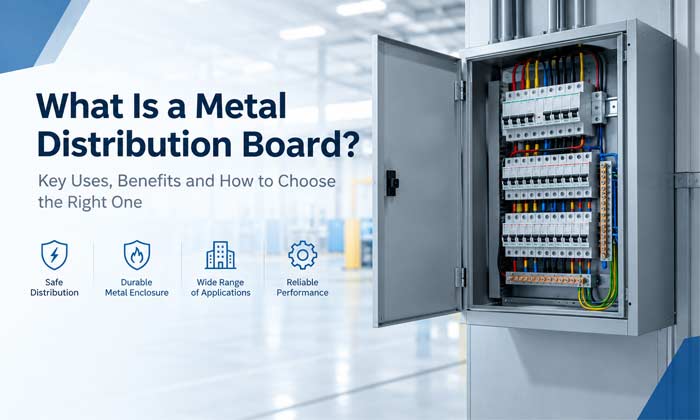
What Is a Metal Distribution Board?
A metal distribution board is an electrical enclosure that houses protective devices and distributes incoming power to multiple outgoing circuits.
Commonly made from steel, galvanized steel, or other suitable metals, a Distribution Board helps organize electrical connections and protect individual circuits in residential, commercial, and industrial installations. It typically accommodates circuit breakers, busbars, neutral terminals, and earthing connections according to the system design.
The metal enclosure provides mechanical strength and protects internal components from external contact and physical damage. However, electrical safety also depends on correctly rated protective devices, appropriate earthing, proper installation, and compliance with applicable standards.
Where Is a Metal Distribution Board Used?
Metal distribution boards are used in a wide range of electrical installations where a durable enclosure and organized circuit distribution are required.
- Residential buildings: Houses and apartments use distribution boards to organize lighting, socket, and appliance circuits.
- Commercial buildings: Offices, retail stores, hotels, and restaurants use them to distribute power to lighting, HVAC systems, sockets, and dedicated equipment.
- Industrial facilities: Workshops, factories, and equipment rooms may require metal distribution boards suited to machinery and other electrical loads.
- Outdoor and demanding environments: Specially designed boards can be used in exposed or corrosive locations when their enclosure rating, protective finish, and construction are appropriate.
For outdoor or humid environments, do not assume that every metal enclosure is waterproof or corrosion-resistant. Check its IP rating, material, coating, cable-entry arrangements, and suitability for the actual installation conditions.
When Should You Use a Metal Distribution Board for Commercial Projects?
A metal distribution board is often a suitable choice for commercial projects that require a robust enclosure, organized circuit management, and long-term serviceability. Its suitability depends on the electrical design and the specifications of the complete assembly.
Consider a metal distribution board when a project requires:
- Greater mechanical strength for demanding installation environments.
- A non-combustible enclosure material to meet relevant project requirements.
- Multiple outgoing circuits for lighting, sockets, equipment, or different building areas.
- Specific enclosure dimensions, mounting arrangements, or configurable internal layouts.
Before selecting a board for a commercial installation, confirm its rated current, operating voltage, phase configuration, short-circuit rating, protective devices, and available circuit ways. Three-phase distribution boards may be appropriate for certain commercial loads, but the final selection must follow the electrical design.
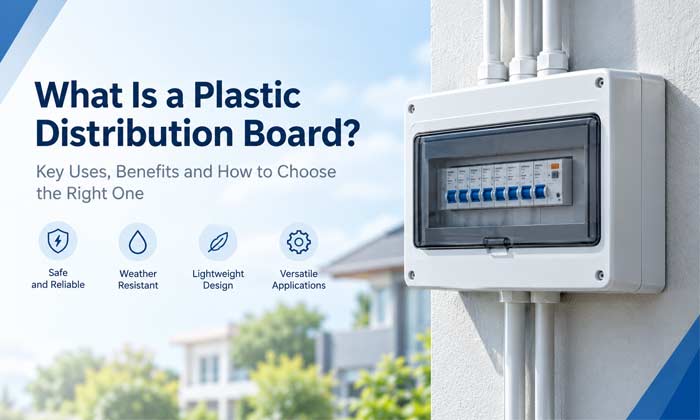
Metal vs. Plastic Distribution Board: Which Is Better?
The choice between a metal and plastic distribution board depends on the installation environment, required mechanical performance, project specifications, and budget. Neither material is automatically the best option for every application.
| Factor | Metal Distribution Board | Plastic Distribution Board |
|---|---|---|
| Mechanical strength | Generally rigid and suitable for applications requiring robust enclosure protection. | Varies by polymer, design, and construction. |
| Fire properties | Metal is non-combustible, but the complete assembly is not automatically fire-rated. | Depends on the material’s tested fire-performance characteristics. |
| Corrosion resistance | May require suitable coatings or specialized metals. | Does not rust, but resistance to chemicals, UV exposure, and heat varies. |
| Typical priority | Mechanical durability and demanding project specifications. | Lower weight and suitability for applications where plastic enclosures are permitted. |
For commercial and industrial projects, metal may be preferable when mechanical strength is a priority. Plastic can also be suitable when the enclosure meets the necessary safety and environmental requirements. Always compare the specifications of the complete product rather than choosing by material alone.
How Do You Choose the Right Metal Distribution Board?
Selecting the right metal distribution board requires more than checking its dimensions or number of circuits. Consider the following factors before purchasing:
- Electrical ratings: Verify the rated current, voltage, phase configuration, and short-circuit capacity required by the installation.
- Number of ways: Ensure the board accommodates the required circuits and protective devices, with suitable space for any planned expansion.
- Enclosure specifications: Check the metal type, enclosure thickness, surface finish, dimensions, and mounting method.
- Environmental protection: Select an appropriate IP rating and corrosion protection for indoor, outdoor, humid, or dusty locations.
- Standards and documentation: Confirm compliance with the product and installation standards applicable to the target market. Depending on the application, relevant requirements may include the IEC 61439 series.
Installation should be carried out by qualified electrical personnel. Correct circuit protection, earthing and bonding, secure cable connections, and periodic inspection are essential to maintaining a safe and reliable electrical system.
Need Help Selecting a Distribution Board?
M&K supplies distribution boards for different indoor, outdoor and electrical installation requirements. For questions about enclosure size, circuit arrangement, IP rating or order specifications, contact the M&K team.