Table of Contents
- Metal vs Plastic Distribution Board
- Metal Distribution Board vs Plastic Distribution Board: What Is the Difference?
- Is Metal Distribution Board Better Than Plastic Distribution Board?
- Which Distribution Board Material Is Better for Different Environments?
- How to Choose Between Metal and Plastic Distribution Board?
- Need Help Choosing a Distribution Board?
Metal vs Plastic Distribution Board
Metal distribution boards offer strength and a non-combustible enclosure; plastic boards are lighter and rust-resistant. Choose based on site and safety requirements.
A distribution board houses circuit breakers and other protective devices, distributing electrical power to individual circuits while providing an enclosure for the electrical components. Its enclosure material influences mechanical protection, resistance to environmental conditions, installation requirements, and maintenance needs.
Metal and plastic distribution boards can both provide reliable electrical distribution when the complete assembly is correctly specified, tested, and installed. Understanding their differences helps electrical contractors, engineers, panel builders, and procurement teams select equipment that meets the practical requirements of each project.
Metal Distribution Board vs Plastic Distribution Board: What Is the Difference?
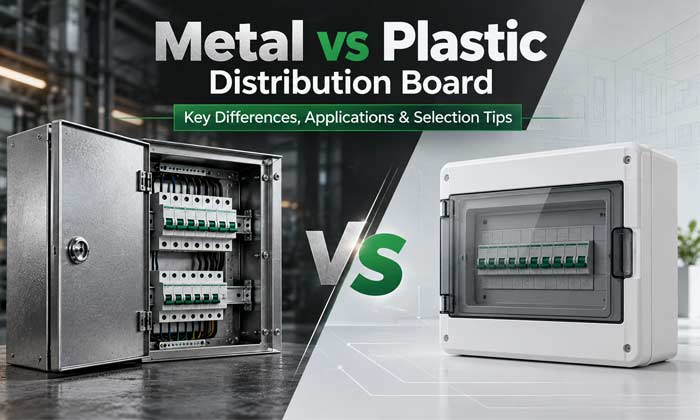
The main difference between a metal and plastic distribution board is the material used for its enclosure. Metal models commonly use galvanized steel, stainless steel, or aluminum, while plastic models typically use engineering polymers such as ABS or polycarbonate. Each material offers a different balance of mechanical strength, electrical properties, thermal behavior, corrosion resistance, and cost.
| Comparison | Metal Distribution Board | Plastic Distribution Board |
|---|---|---|
| Common materials | Galvanized steel, stainless steel, or aluminum. | ABS, polycarbonate, or other suitable engineering plastics. |
| Mechanical strength | Generally offers good rigidity and resistance to physical impact and deformation. | Depends on the polymer grade, wall thickness, reinforcement, and enclosure design. |
| Fire and heat | Metal is non-combustible, although this does not automatically guarantee fire containment by the complete assembly. | Heat resistance and flame performance depend on the material formulation and relevant test results. |
| Corrosion resistance | Steel may require suitable coatings or corrosion-resistant construction, depending on the environment. | Does not rust, but chemical compatibility and resistance to UV exposure vary by material. |
| Electrical properties | The conductive enclosure requires appropriate protective earthing and bonding in accordance with the design and applicable regulations. | The insulating enclosure does not conduct electricity like metal, but the electrical installation still requires the prescribed protective measures. |
| Weight and installation | Generally heavier and may require more substantial mounting support. | Generally lighter, making handling and mounting easier. |
| Initial cost | May cost more depending on the metal, thickness, finish, and construction. | Often more economical for standard applications, depending on the material grade and specification. |
| Electromagnetic shielding | Can provide electromagnetic interference shielding when the enclosure, seams, and bonding are suitably designed. | Usually provides limited inherent electromagnetic shielding unless specially designed or supplemented. |
These differences are general characteristics rather than guarantees for every product. For example, stainless steel and galvanized steel have different corrosion properties, while flame-retardant polycarbonate and standard ABS may behave differently under heat. Actual performance depends on the material specification, enclosure construction, and testing of the complete distribution board.
How Does Enclosure Material Affect Electrical Safety?
Enclosure material is one part of electrical safety, not a substitute for appropriate circuit protection and assembly design. A metal enclosure can offer strong mechanical protection and a non-combustible outer shell, but its conductive surfaces must be properly protected against electrical fault hazards. A plastic enclosure provides electrical insulation at the enclosure surface, but it must still meet the required impact, temperature, flame-performance, and electrical safety specifications.
Neither material automatically determines a distribution board’s rated current, short-circuit withstand capability, ingress protection, or ability to contain an internal electrical fault. These characteristics must be assessed against the complete assembly’s ratings, test evidence, and intended operating conditions.
Is Metal Distribution Board Better Than Plastic Distribution Board?
A metal distribution board is often the better option for installations that demand greater enclosure rigidity, mechanical protection, or a non-combustible enclosure material. A plastic distribution board may be the better choice for installations where corrosion resistance, low weight, electrical insulation, and cost-effective installation are more important.
The decision should be based on the following practical differences.
When a Metal Distribution Board Is a Good Choice
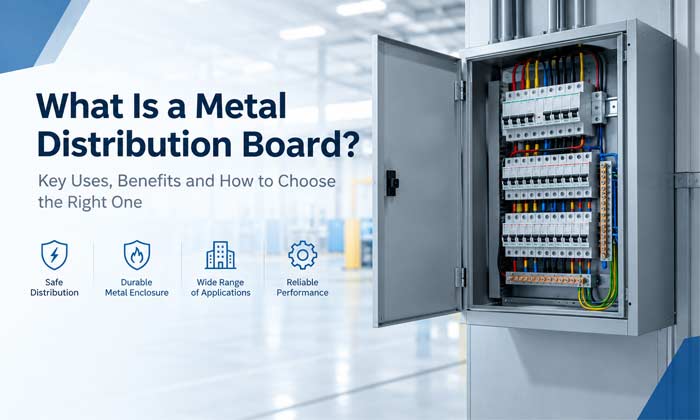
Metal enclosures are often suitable for installations where structural strength and resistance to physical damage are important.
- Industrial plants and workshops where electrical equipment may be exposed to mechanical impact.
- Commercial buildings and electrical rooms with demanding enclosure specifications.
- Installations that require a non-combustible enclosure material, subject to applicable fire-safety requirements.
- Applications requiring electromagnetic shielding from a suitably designed metal enclosure.
- Projects where the enclosure must support heavier components or withstand demanding mounting conditions.
When a Plastic Distribution Board Is a Good Choice
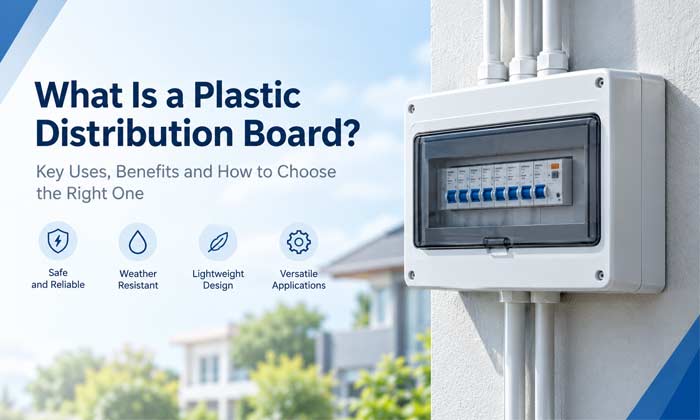
Plastic enclosures are often suitable when lightweight construction, corrosion resistance, and ease of installation are key considerations.
- Residential installations and suitable light commercial applications.
- Humid or coastal locations where rust is a concern and the selected plastic is compatible with the environment.
- Retrofit projects where lower enclosure weight can simplify handling and mounting.
- Installations requiring an insulating enclosure surface.
- Projects where a tested plastic enclosure meets the required impact, temperature, and fire-performance specifications.
Metal is not automatically the better option for every industrial installation, and plastic is not limited to residential use. Industrial applications may favor plastic when chemical exposure and corrosion are major concerns, while residential projects may require metal enclosures because of local regulations or specific fire-safety requirements.
Heat management also deserves attention. Metal generally conducts heat more readily than plastic, but this does not mean that every metal distribution board will run cooler. Internal power losses, ventilation, enclosure size, ambient temperature, component arrangement, and the assembly’s thermal design all influence operating temperatures.
Which Distribution Board Material Is Better for Different Environments?
The installation environment is often more useful for choosing a distribution board than the material alone. Moisture, salt exposure, sunlight, chemical contact, mechanical impact, and temperature changes can affect enclosure performance over time.
| Installation Environment | Material Considerations | What to Check |
|---|---|---|
| Residential interiors | Metal or plastic may be suitable depending on local requirements and the installation design. | Circuit capacity, enclosure dimensions, fire requirements, and applicable regulations. |
| Industrial facilities | Metal may suit impact-prone areas; compatible engineering plastics may suit some corrosive environments. | Mechanical protection, chemical compatibility, heat dissipation, and electrical ratings. |
| Coastal and humid locations | Suitable plastics avoid rust; corrosion-resistant metal grades and finishes are alternatives. | Salt exposure, corrosion protection, sealing, and ingress protection. |
| Outdoor installations | Both materials may be suitable when specifically designed for outdoor service. | UV resistance, water and dust ingress, temperature range, and mounting conditions. |
| Chemical processing areas | Select a compatible polymer or corrosion-resistant metal based on the actual chemicals present. | Chemical concentration, exposure duration, temperature, and seal compatibility. |
| Fire-sensitive applications | Non-combustible metal may be appropriate, but the complete assembly must meet the applicable requirements. | Fire-related test evidence, applicable building regulations, and assembly certification. |
Are Metal or Plastic Distribution Boards Better for Outdoor Use?
Neither material is universally better for outdoor applications. A metal distribution board can provide good structural protection, but its material and surface finish must be appropriate for exposure to rain, humidity, and corrosive conditions. A plastic distribution board avoids rust, but its polymer must have suitable UV resistance and weathering performance if it will be exposed to direct sunlight.
The IP rating is another important factor because it indicates the enclosure’s protection against solid objects and water under specified test conditions. However, an IP rating alone does not establish resistance to UV degradation, chemical exposure, corrosion, or mechanical impact. Cable glands, seals, covers, and installation methods must also be suitable for the intended environment.
For installations exposed to several environmental stresses, evaluate the full set of requirements rather than selecting a material based on a single advantage. Product documentation and test results provide a more reliable basis for comparison than general material descriptions.
How to Choose Between Metal and Plastic Distribution Board?
Choosing the right distribution board starts with the electrical system and installation requirements. Before comparing enclosure materials or prices, establish what the board needs to accommodate and the conditions under which it will operate.
1. Confirm Electrical Specifications
Determine the rated voltage, current, phase configuration, number of outgoing circuits, protective devices, and required short-circuit performance. Check that the complete distribution board is suitable for the electrical system and expected load.
2. Assess the Installation Environment
Identify whether the board will be installed indoors, outdoors, in a coastal location, or near moisture, dust, or chemicals. Select the enclosure material, IP rating, surface finish, and accessories according to the actual exposure conditions.
3. Review Mechanical and Fire-Safety Requirements
Consider potential impact, vibration, temperature exposure, and applicable fire-safety requirements. Verify the relevant product test results rather than assuming that metal or plastic alone guarantees a particular level of protection.
4. Check Installation and Maintenance Needs
Evaluate enclosure weight, mounting support, wiring access, protective earthing or bonding requirements, and the accessibility needed for inspection. Consider how easily the enclosure and its protective finish can be maintained over its service life.
5. Compare Total Cost of Ownership
Compare purchase price, transportation, installation labor, maintenance, corrosion protection, and potential replacement costs. Plastic may reduce initial and handling costs, while a suitable metal enclosure may offer advantages in applications with demanding mechanical requirements.
6. Verify Standards and Product Documentation
Check the standards and conformity requirements applicable in the destination market. Where relevant, review the applicable parts of the IEC 61439 series, including IEC 61439-3 for distribution boards within its scope. Confirm the ratings and documentation for the complete assembly, not just the empty enclosure.
What Should Buyers Check Before Ordering a Distribution Board?
For electrical contractors, panel builders, wholesalers, and project procurement teams, confirming the product configuration before ordering helps reduce specification mismatches and installation delays.
- Enclosure material: Confirm the required metal type or plastic grade.
- Dimensions and mounting: Specify enclosure size, installation method, and available space.
- Circuit configuration: Confirm the number of ways, protective devices, and expansion requirements.
- Electrical ratings: Verify rated voltage, current, and short-circuit performance.
- Environmental protection: Specify the required IP rating, corrosion resistance, UV performance, and operating temperature range.
- Accessories and entry points: Confirm cable entry positions, glands, terminals, covers, and other required components.
- Compliance documents: Request applicable declarations, certificates, and test documentation for the intended market.
- Commercial requirements: Confirm order quantity, delivery schedule, packaging, and any agreed customization.
A clear technical specification makes it easier to compare products from different suppliers on an equivalent basis. If the application has unusual environmental or electrical demands, provide the supplier with drawings, installation details, and relevant project requirements before confirming the selection.
Finally, distribution boards should be installed, inspected, and verified by qualified electrical personnel in accordance with the manufacturer’s instructions and applicable regulations. Correct protective-device selection, wiring, earthing or bonding, and ongoing inspection remain essential regardless of enclosure material.
Need Help Choosing a Distribution Board?
Selecting a distribution board involves more than choosing between metal and plastic. The right solution must match your electrical specifications, installation environment, protection requirements, and project budget. M&K can help you explore suitable distribution board options and discuss your product sourcing requirements. Contact our team if you need further information or assistance with your project.