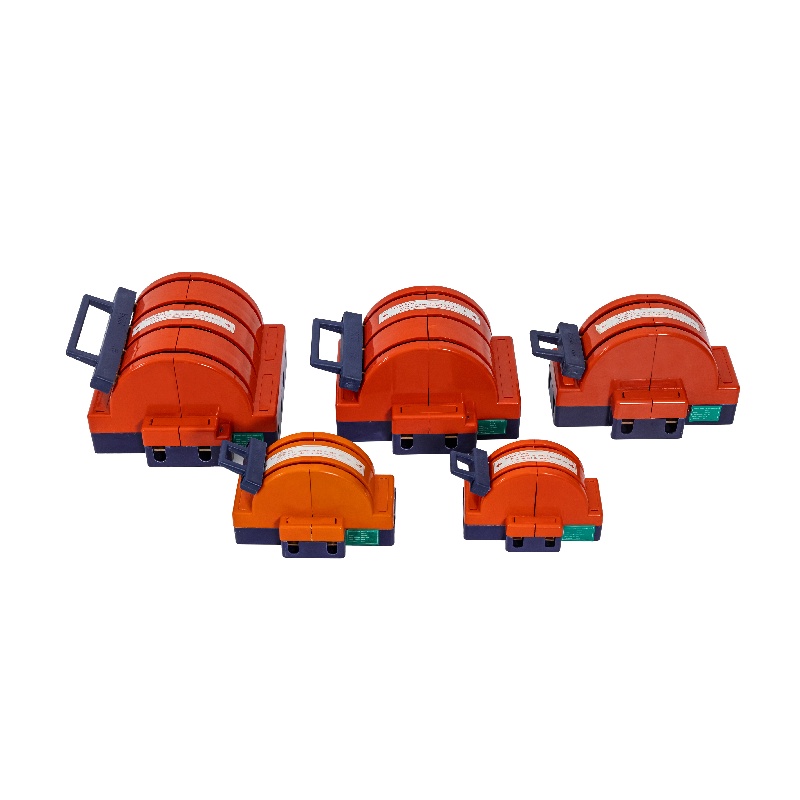
Metal junction boxes can be customized in size, shape, material type, sheet thickness, knockout holes, cable entry points, surface finish, cover style, mounting method, internal accessories, environmental protection level, labels, and branding. These custom options help the box fit specific wiring layouts, conduit directions, installation spaces, component arrangements, corrosion conditions, and visual or identification requirements. In practical applications, the most common custom features are usually the box dimensions, knockout layout, material and thickness, surface treatment, cover design, mounting structure, and internal accessories.
Customization should not mean changing every detail without a reason. A good custom metal junction box should solve a real installation or protection problem: it should be easier to install, safer to use, more suitable for the environment, and clearer in specification.
Custom Metal Junction Box Size and Shape Options
Size and shape are among the most common customization options for metal junction boxes. The width, height, depth, and overall structure can be adjusted when a standard box does not fit the installation space, wiring layout, or equipment design.
• Custom width, height, and depth
• Square or rectangular box design
• Round or special-shaped box design
• Extra internal depth for wiring
• Compact size for limited spaces
• Enlarged body for terminals or components
A suitable box size provides enough internal wiring space without making the box unnecessarily large. This is useful when the junction box must fit a wall space, machine frame, control system, or fixed equipment layout.
Custom Knockout Holes for Metal Junction Boxes
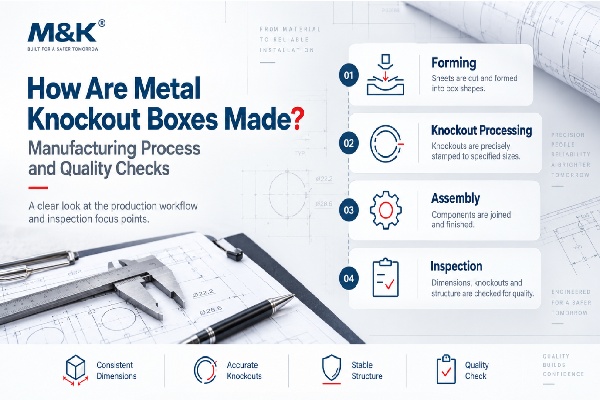
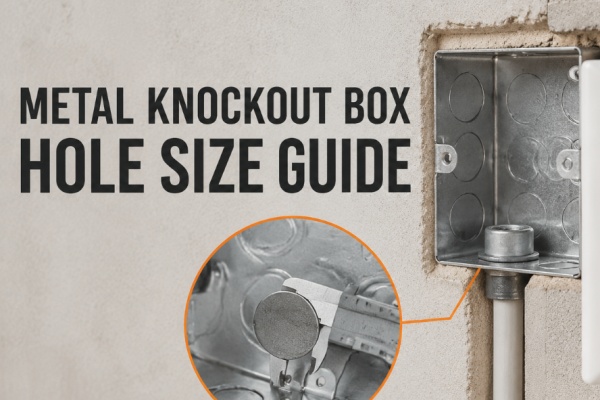
Knockout holes and entry points can be customized according to the conduit route, cable direction, and wiring layout. This is especially important for metal knock out boxes, where the hole size and position directly affect installation convenience.
• Custom hole diameter
• Custom hole quantity
• Knockouts on one side or multiple sides
• Top, bottom, side, or rear entry points
• Pre-punched or pre-drilled holes
• Special cable entry openings
For accurate production, the drawing should clearly show hole diameter, center position, side location, and spacing. Vague instructions such as “add more holes” may lead to incorrect hole placement.
Custom Metal Junction Box Material and Thickness Options
The material and sheet thickness of a metal junction box can be customized according to strength, weight, corrosion resistance, cost, and installation environment.
| Material Option | Common Use | Main Advantage |
|---|---|---|
| Galvanized Steel | General electrical box applications | Good forming performance and basic corrosion resistance |
| Painted Steel | Indoor or controlled environments | Clean appearance and flexible color options |
| Stainless Steel | Humid or corrosion-prone environments | Stronger corrosion resistance |
| Aluminum | Applications requiring lighter weight | Lightweight structure and suitable corrosion behavior |
Thickness customization affects box rigidity, deformation resistance, cover fit, screw holding performance, and overall product strength. It should be selected according to the application, not only by price.
Custom Surface Finish Options for Metal Junction Boxes
Surface finish can be customized for corrosion resistance, scratch resistance, appearance, color matching, and equipment consistency. It should be selected according to the environment, not only the color preference.
For outdoor, humid, or industrial environments, the finish should support corrosion protection. For equipment systems or branded products, custom color coating can help the metal junction box match nearby cabinets, machines, or visual standards.
Custom Cover Options for Metal Junction Boxes
The cover affects access, inspection, maintenance, sealing, safety, and appearance. A suitable cover design should match how often the box needs to be opened and what protection level is required.
| Cover Option | Typical Purpose |
|---|---|
| Screw-down Cover | Simple, stable, and suitable for common applications. |
| Hinged Cover | Useful when frequent opening and maintenance are needed. |
| Transparent Window Cover | Allows internal inspection without opening the box. |
| Gasketed Cover | Helps improve dust or water protection when required. |
| Lockable Cover | Adds access control for specific applications. |
The cover and box body should be designed together. If the cover does not align correctly, the enclosure may fail to close, seal, or protect properly.
Custom Internal Accessories for Metal Junction Boxes
Internal accessories can be added when the metal junction box needs to hold components, organize wiring, improve grounding, or support installation.
Used for mounting small electrical components inside the box.
Provides a flat mounting surface for terminals or components.
Helps organize wire connections more clearly.
Keeps internal wiring cleaner and easier to maintain.
Internal layout should leave enough wiring space. A box may look large enough from the outside, but become difficult to use if rails, terminals, brackets, or cables are placed too tightly.
Custom Mounting Options for Metal Junction Boxes
Mounting structures can be customized so the metal junction box can be fixed securely to a wall, pole, frame, machine body, control system, or other installation surface.
• Wall mounting holes
• External mounting feet
• Mounting flanges
• Rear mounting holes
• Bracket mounting
• Pole-mount kits
• Custom fixing points
A suitable mounting design reduces extra drilling, improves stability, and makes repeated installation easier.
Custom IP and NEMA Protection for Metal Junction Boxes
Environmental protection can be customized when the box is used outdoors, in wet areas, dusty environments, corrosive locations, or industrial systems. This may involve material selection, gasket design, cover structure, surface treatment, and enclosure rating.
• Gasket sealing
• Rain protection
• Dust protection
• Splash resistance
• Drainage design
• Corrosion-resistant material or coating
NEMA types are often used to describe enclosure protection in North America. IP ratings under IEC 60529 describe protection against dust and water ingress.
A protection rating should match the actual enclosure design. Gasket, cover structure, sealing surface, material, and testing requirements may all need to work together.
Custom Labels, Logos, and Markings for Metal Junction Boxes
Logos, labels, engraved markings, and packaging identification can be customized for product recognition, installation guidance, inventory management, traceability, or brand presentation.
For label customization, the content, size, language, material, and placement should be confirmed before production.
Information Needed for Custom Metal Junction Boxes
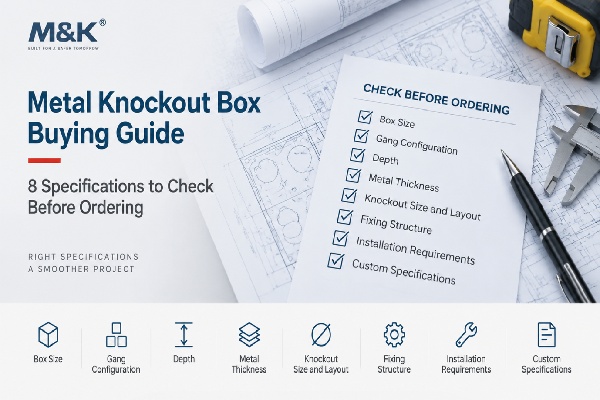
A custom metal junction box is easier to produce accurately when the requirements are clear from the beginning. A drawing is better than a verbal description, especially for hole positions, cover matching, mounting points, and internal layout.
| Information Needed | Why It Matters |
|---|---|
| Box size | Confirms width, height, depth, and internal space. |
| Material and thickness | Determines strength, weight, and corrosion resistance. |
| Knockout layout | Confirms conduit entry size, position, and direction. |
| Cover style | Affects access, sealing, maintenance, and safety. |
| Mounting method | Determines how the box will be fixed. |
| Surface finish | Affects appearance and environmental protection. |
| Internal accessories | Confirms DIN rail, terminal block, back panel, or bracket needs. |
| Protection requirement | Confirms dust, water, rain, or corrosion protection. |
| Label or logo file | Confirms marking and branding details. |
Common Custom Metal Junction Box Design Mistakes
Customization should make the box more suitable for the application, not more complicated without reason. The most common problems come from unclear requirements.
• Changing the size without confirming internal wiring space
• Adding too many knockouts without a clear conduit layout
• Choosing material only by cost, not by environment
• Requesting a finish color without checking corrosion resistance
• Customizing the cover without checking screw alignment or sealing
• Adding internal accessories without confirming component layout
• Asking for an IP or NEMA rating without matching the enclosure structure
• Providing only photos when a drawing is needed
• Ignoring label, packaging, or installation details
M&K Custom Metal Junction Box Support
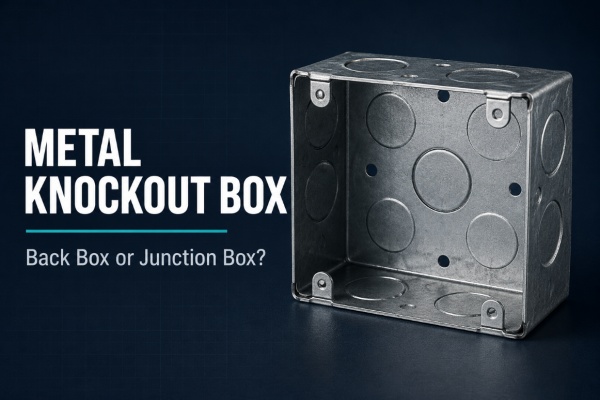
M&K supports custom metal junction boxes and metal knock out boxes for practical electrical applications. Custom options can include size, material thickness, knockout layout, surface finish, cover style, mounting method, internal accessories, labels, packaging, and application-specific requirements.
A good custom metal junction box should be easy to install, stable in structure, suitable for its environment, and clear in specification. Whether the requirement is a special knockout pattern, stronger material, custom coating, hinged cover, DIN rail, or branded label, the key is to confirm the details clearly before production.
If you have questions about custom metal junction box specifications, knockout design, surface treatment, cover options, mounting methods, or related requirements, contact M&K for more information.