Table of Contents
- What Is a Distribution Board Used For?
- How Does a Distribution Board Work Step by Step?
- What Are the Main Components Inside a Distribution Board?
- Why Does a Distribution Board Need Circuit Protection?
- Why Is Circuit Separation Important?
- How Does a Distribution Board Improve Electrical Safety?
- What Should Buyers Check When Choosing a Distribution Board?
- Need Help Choosing a Distribution Board?
A distribution board works by receiving the main power supply, dividing it through busbars, and sending protected branch circuits to different electrical loads safely.
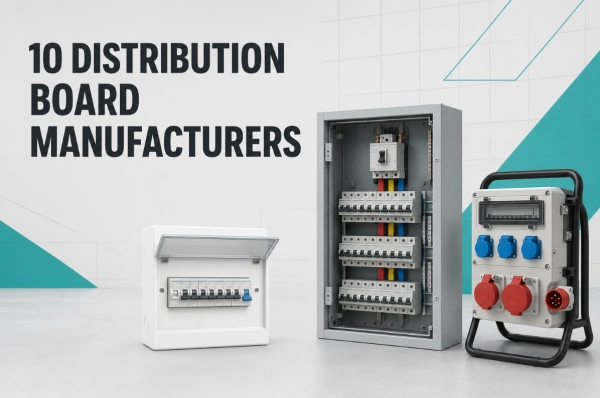
A distribution board, also called a DB board or electrical distribution board, is the central control point for low-voltage power distribution. It receives electricity from an upstream power source, divides it into smaller outgoing circuits, and helps protect each circuit with suitable electrical devices.
In residential buildings, commercial spaces, workshops, and industrial projects, a distribution board makes the electrical system easier to control, safer to operate, and more convenient to maintain.
What Is a Distribution Board Used For?
A distribution board is used to divide one main electrical supply into several branch circuits. These circuits may supply lighting, sockets, air conditioners, machines, pumps, office equipment, or other electrical loads.
Instead of connecting all electrical loads to one uncontrolled line, the distribution board separates them into different circuits. This makes power distribution clearer, safer, and easier to inspect.
| Main Use | What It Means |
|---|---|
| Power distribution | Sends electricity from one main supply to different areas or loads. |
| Circuit control | Allows different circuits to be switched or isolated separately. |
| Electrical protection | Holds protective devices such as MCBs, RCCBs, RCDs, or RCBOs. |
| Maintenance support | Helps electricians find, isolate, and repair circuit problems more easily. |
| Future expansion | Makes it easier to add or adjust circuits when the project requires changes. |
How Does a Distribution Board Work Step by Step?
A distribution board works through a clear power flow process: power enters the board, passes through the main switch, is divided by busbars, protected by circuit breakers, and then sent to different outgoing circuits.
1. Main Power Enters the Board
The electrical supply enters from a utility line, meter box, transformer, generator, or main distribution panel. It first connects to a main switch, isolator, or main circuit breaker.
2. Power Goes Through Busbars
Busbars are metal conductors inside the board. They act like an internal power pathway and help distribute the incoming electricity to different outgoing circuits.
3. Breakers Protect Each Circuit
Each branch circuit passes through a protective device. If overload, short circuit, or leakage current occurs, the device can trip and cut off the affected circuit.
4. Power Is Sent to Loads
After protection, power travels through outgoing wires to lighting, sockets, HVAC systems, machines, pumps, or other electrical equipment.
5. Neutral and Earth Complete Safety
The neutral bar provides a return path for current. The earth bar provides a safe path for fault current, helping reduce electric shock and equipment risk.
What Are the Main Components Inside a Distribution Board?
The components inside a distribution board may vary depending on the project, voltage system, number of circuits, load type, and local electrical standards. However, most distribution boards include the following key parts.
| Component | Main Function |
|---|---|
| Main switch / isolator | Turns off the whole distribution board during maintenance or emergencies. |
| Busbar | Distributes incoming power to different outgoing circuits. |
| MCB | Protects individual circuits from overload and short circuit. |
| RCD / RCCB | Detects leakage current and helps reduce electric shock risk. |
| RCBO | Combines overcurrent protection and leakage protection in one device. |
| Neutral bar | Provides a return connection for neutral wires. |
| Earth bar | Provides grounding connection for fault protection. |
| Enclosure | Protects internal components and supports wall-mounted or project installation. |
Why Does a Distribution Board Need Circuit Protection?
A distribution board needs circuit protection because electrical faults can happen during daily use. If a circuit carries too much current, has damaged wiring, or experiences leakage current, the affected circuit should be disconnected quickly.
- Overload protection: helps prevent a circuit from carrying too much current for too long.
- Short-circuit protection: disconnects power when a high fault current occurs.
- Leakage protection: helps reduce electric shock risk when current leaks through an unsafe path.
- Surge protection: helps protect equipment from transient overvoltage when SPD devices are used.
Without proper protective devices, a distribution board would only divide power. It would not provide enough safety control for the circuits connected to it.
Why Is Circuit Separation Important?
Circuit separation is important because different rooms, loads, and equipment may require different levels of power and protection. Separating circuits also prevents one fault from affecting the entire electrical system.
For example, if a socket circuit has a problem, the lighting circuit may still work. If one machine circuit trips in a workshop, other equipment may continue operating. This helps reduce downtime and makes fault checking easier.
In practical projects, circuit separation makes the electrical system easier to manage, especially in commercial buildings, factories, offices, apartments, and project sites with multiple electrical loads.
How Does a Distribution Board Improve Electrical Safety?
A distribution board improves electrical safety by combining power distribution, circuit protection, grounding, and controlled isolation in one enclosure. It helps electricians and users manage power more clearly and respond to faults more quickly.
- It helps identify which circuit controls which area or load.
- It allows the whole board or selected circuits to be switched off.
- It helps reduce overload, short-circuit, and leakage risks.
- It keeps wiring and protective devices arranged in a clear structure.
- It makes inspection, repair, and future circuit expansion easier.
What Should Buyers Check When Choosing a Distribution Board?
When choosing a distribution board, buyers should not only look at the number of ways. The board should match the electrical system, installation environment, circuit quantity, and protection requirements.
| Selection Point | Why It Matters |
|---|---|
| Number of ways | Determines how many outgoing circuits the board can support. |
| Single-phase or three-phase system | Must match the actual power supply system. |
| Enclosure material | Affects durability, protection level, and installation environment. |
| Internal wiring space | Supports cleaner wiring, easier installation, and better maintenance. |
| Busbar design | Helps ensure stable internal power distribution. |
| Protection device compatibility | Ensures MCBs, RCCBs, RCBOs, or SPDs can be installed properly. |
| Neutral and earth bar layout | Improves wiring safety and inspection convenience. |
For B2B purchasing, buyers should also consider consistent product structure, stable quality, reliable packaging, and compatibility with common electrical accessories used in their market.
Need Help Choosing a Distribution Board?
A distribution board works by receiving the main electrical supply, dividing it into branch circuits, protecting each circuit, and sending power safely to different electrical loads. Its value is not only power distribution, but also circuit control, fault protection, easier maintenance, and safer long-term electrical management.
M&K Distribution Board Support
M&K supplies distribution board products for residential, commercial, and project electrical applications. If you still have questions about distribution board selection, specifications, circuit configuration, or purchasing options, you can contact us for further support.