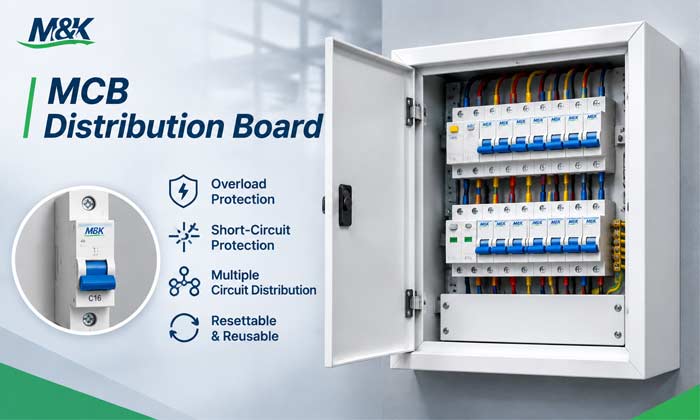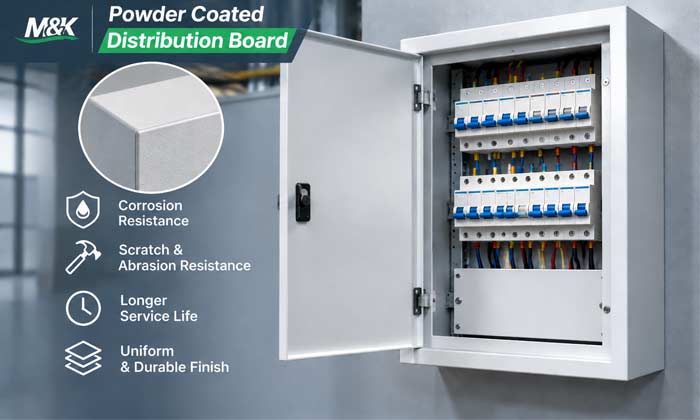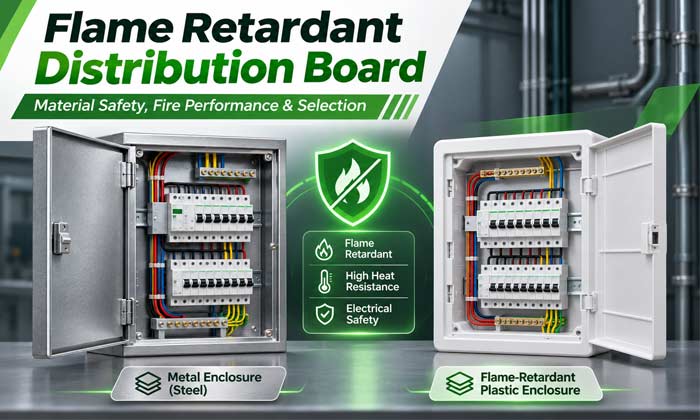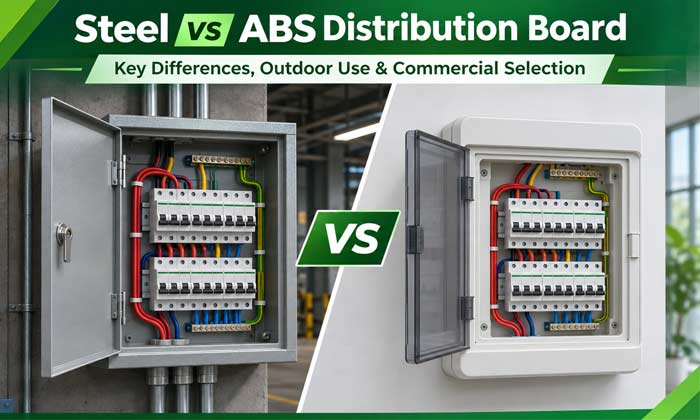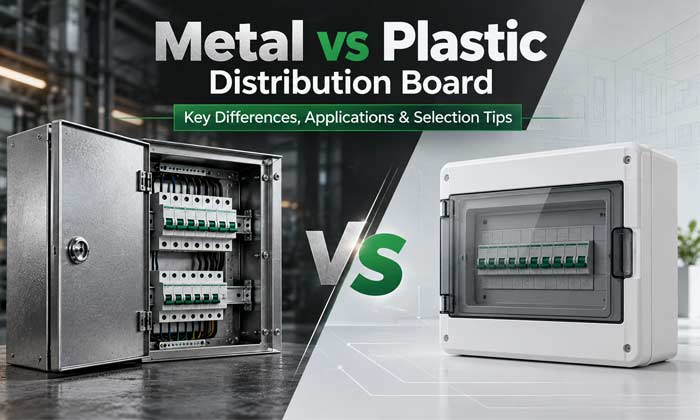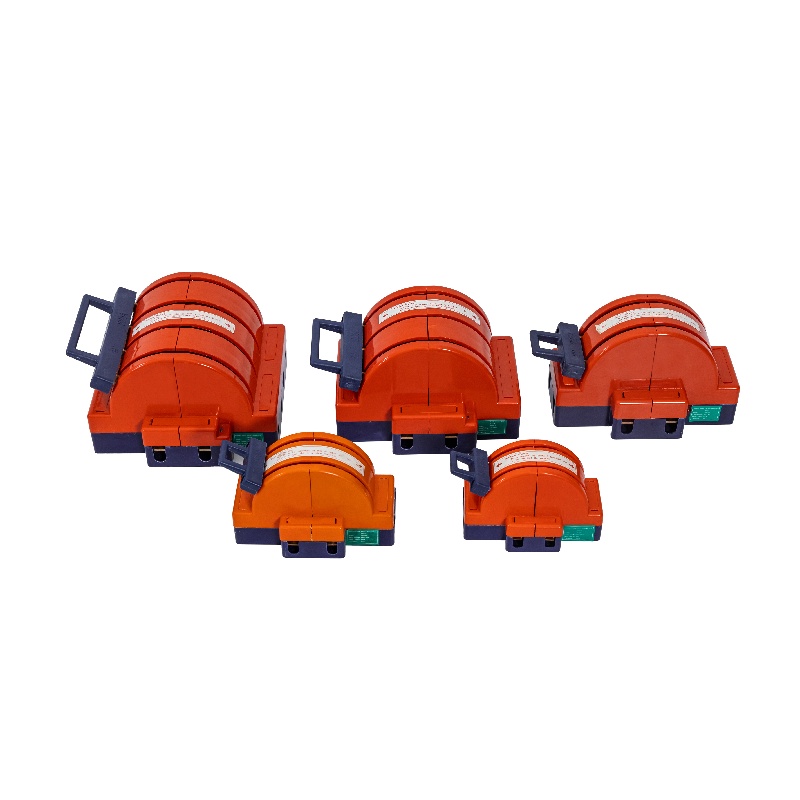
A powder-coated distribution board has a cured protective finish on its metal enclosure that helps resist corrosion, scratches, and everyday wear.
A distribution board houses circuit breakers, busbars, and other electrical components responsible for distributing power across multiple circuits. For metal enclosures, surface protection is an important consideration because the cabinet may be exposed to moisture, dust, chemicals, and physical contact during transportation, installation, and daily operation.
Powder coating is widely used to improve the surface durability and appearance of metal electrical enclosures. However, its protective performance depends on more than the final coating. Metal preparation, pretreatment, coating application, and curing all influence the finished result.
What Is a Powder-Coated Distribution Board?
A powder-coated distribution board is an electrical distribution enclosure with a metal surface finished using a dry powder coating process. Unlike conventional liquid paint, powder coating uses finely ground resin and pigment particles that are electrostatically applied to a prepared metal surface and then cured with heat.
During curing, the powder melts, flows, and forms a continuous coating over the treated surface. Once properly cured, the coating provides a protective layer that improves resistance to everyday scratches, abrasion, and environmental exposure.
Common powder coating materials include:
- Epoxy Powder Coating: Offers good adhesion and chemical resistance. It is commonly used for indoor applications but may lose its appearance under prolonged UV exposure.
- Polyester Powder Coating: Commonly selected for its weathering and UV resistance, making suitable formulations useful for outdoor metal enclosures.
- Epoxy-Polyester Hybrid Coating: Combines selected properties of epoxy and polyester and is commonly used for indoor electrical enclosures.
The appropriate coating depends on the enclosure material, installation environment, and required service conditions. A powder coating suitable for an indoor electrical room may not provide sufficient weathering performance for an enclosure exposed to direct sunlight and rain.
How Is Powder Coating Applied to a Distribution Board?
Powder coating generally involves several manufacturing stages. Proper surface preparation is particularly important because contaminants and poor adhesion can reduce the effectiveness of the final coating.
- Surface Cleaning: Remove oil, grease, dust, rust, and other contaminants from the metal surface.
- Surface Pretreatment: Apply an appropriate chemical or conversion treatment to prepare the metal and improve coating adhesion and corrosion resistance.
- Drying: Remove moisture and prepare the surface for powder application.
- Powder Application: Apply powder electrostatically to the grounded metal enclosure to help achieve an even coating.
- Heat Curing: Place the coated enclosure in a curing oven so the powder melts, flows, and forms a durable finish.
- Quality Inspection: Check the coating appearance, coverage, adhesion, and other specified quality requirements before the enclosure proceeds to assembly or delivery.
These stages work together to determine the final surface quality. Simply applying a thicker coating cannot compensate for inadequate cleaning, poor pretreatment, or incorrect curing conditions.
Why Is Powder Coating Used on Metal Distribution Boards?
Metal distribution boards are commonly used in commercial and industrial electrical installations where enclosure strength and structural stability are important. However, exposed metal surfaces can gradually deteriorate when they come into contact with moisture, oxygen, chemicals, or other environmental factors.
Powder coating provides an additional protective layer and helps maintain the enclosure’s surface condition throughout its intended service life.
1. Improving Corrosion and Rust Resistance
Steel can oxidize when exposed to moisture and oxygen, resulting in rust that gradually damages the metal surface. Industrial environments may introduce additional risks through chemicals, humidity, and airborne contaminants.
A properly applied powder coating acts as a barrier between the metal substrate and the surrounding environment. It helps reduce direct exposure to moisture and other corrosive elements, lowering the risk of surface corrosion when the coating remains intact.
However, powder coating does not make ordinary steel completely corrosion-proof. Scratches, damaged edges, poorly treated areas, and exposed metal around openings can still become starting points for rust.
2. Protecting Against Scratches and Physical Wear
Distribution boards may experience friction, handling damage, and accidental contact during manufacturing, transportation, installation, and maintenance.
A properly cured powder coating provides a durable surface that helps resist scratching, chipping, and abrasion. This is particularly useful for electrical enclosures installed in workshops, factories, equipment rooms, and other environments where physical contact is more common.
Actual resistance depends on coating formulation, film thickness, curing quality, and the severity of the mechanical exposure.
3. Improving Coating Adhesion and Surface Consistency
Electrostatic powder application helps distribute coating material across the metal surface. Compared with conventional liquid painting, powder coating can provide a consistent finish without typical liquid-paint problems such as runs and sags.
However, complex enclosure structures still require proper application control. Corners, recessed areas, edges, holes, and welded joints may need particular attention to achieve suitable coating coverage.
A uniform finish also helps maintain the appearance of enclosure doors, side panels, mounting structures, and other visible components.
4. Maintaining Appearance and Surface Quality
Powder coating is available in different colors, textures, and surface finishes. Smooth, matte, and textured finishes can be selected according to product design and project requirements.
For electrical distribution equipment, a consistent finish helps maintain a professional appearance and makes it easier to keep the enclosure surface clean during routine maintenance.
5. Supporting Long-Term Maintenance
Surface damage and corrosion can increase the need for inspection, repair, and repainting. By improving the resistance of the enclosure surface to normal wear and environmental exposure, powder coating can help reduce some maintenance requirements.
Its long-term effectiveness still depends on the original surface treatment, installation conditions, and how coating damage is handled during operation.
Does Surface Treatment Affect Distribution Board Durability?
Yes. Surface treatment directly influences how well a metal distribution board withstands environmental exposure, physical wear, and corrosion over time. Even a well-constructed steel enclosure may deteriorate prematurely if its surface preparation and protective coating are inadequate.
Surface treatment should therefore be considered part of the enclosure’s manufacturing quality rather than simply an appearance-related process.
Why Is Pretreatment Important Before Powder Coating?
Powder coating performance depends heavily on the condition of the metal surface underneath it. If oil, dust, oxidation, or welding residue remains on the substrate, the coating may not adhere properly.
Common pretreatment methods include:
- Degreasing: Removes oils and grease left from metal processing and handling.
- Cleaning and Rinsing: Removes dust, residues, and remaining contaminants before coating.
- Phosphate or Other Conversion Treatment: Creates a prepared surface that can improve coating adhesion and corrosion resistance, depending on the metal and treatment system.
- Primer or Additional Protective Treatment: May be used as part of a multi-layer protection system for applications with higher corrosion requirements.
The appropriate pretreatment depends on the substrate material and coating system. Different processes may be used for cold-rolled steel, galvanized steel, and other metals.
Where Does Surface Damage Commonly Occur?
Corrosion does not always develop evenly across an electrical enclosure. It often starts in areas where moisture accumulates, protective coverage is insufficient, or the coating has been damaged.
Common areas requiring attention include:
- Door edges and enclosure corners.
- Welded joints and folded metal sections.
- Cable entry holes and mounting openings.
- Hinges, locks, and connection points.
- Bottom edges and mounting brackets.
- Scratched areas caused by transportation or installation.
These areas should be checked during manufacturing inspection and routine maintenance. Proper pretreatment, coating coverage, and careful handling help reduce the likelihood of early surface deterioration.
Does Powder Coating Improve the IP Rating of a Distribution Board?
No. Powder coating and IP protection address different aspects of enclosure performance.
Powder coating protects the metal surface against corrosion and physical wear. An IP rating, on the other hand, describes the enclosure’s protection against the ingress of solid objects and water under specified test conditions.
The IP rating depends on the overall enclosure construction, including door seals, gaskets, cable glands, joints, and openings. A powder-coated enclosure does not automatically have a higher IP rating or become waterproof.
For outdoor and industrial installations, buyers should evaluate surface treatment and IP protection separately to ensure that both requirements are properly addressed.
How to Prevent Rust on Metal Distribution Boards?
Preventing rust requires more than selecting a powder-coated enclosure. The metal substrate, surface preparation, coating system, installation environment, and maintenance practices all influence corrosion resistance.
The following measures can help protect metal distribution boards during long-term use.
1. Select Suitable Metal and Coating Materials
Start by choosing an enclosure material and coating system appropriate for the installation environment.
For standard indoor applications, properly pretreated steel with a suitable powder coating may provide sufficient surface protection. For coastal, outdoor, or chemically exposed environments, galvanized steel, stainless steel, or an enhanced corrosion-protection system may be more appropriate.
The coating formulation should also match the exposure conditions. For example, outdoor enclosures generally require powder coatings with suitable weathering and UV resistance.
2. Ensure Proper Surface Pretreatment
Surface preparation is essential for preventing premature coating failure. Metal surfaces should be cleaned and treated according to the selected coating system before powder application.
Pay particular attention to welds, edges, holes, and recessed sections. Inadequate preparation in these areas may result in weak adhesion and localized corrosion.
3. Maintain Appropriate Coating Thickness and Curing
The coating should meet the manufacturer’s specified film thickness and curing requirements. An insufficient coating may leave the metal vulnerable to environmental exposure, while excessive or uneven application can affect finish quality and component fit.
Curing conditions must also follow the powder manufacturer’s specifications. Incorrect temperature or curing time may reduce coating performance and adhesion.
4. Protect the Enclosure During Transportation and Installation
Even a properly coated distribution board can develop corrosion if its protective surface is damaged.
Use appropriate packaging and handling procedures to avoid scratches, dents, and impact damage. During installation, avoid unnecessary drilling or cutting that exposes untreated metal. If modifications are required, exposed areas should receive suitable protective treatment according to the manufacturer’s instructions.
5. Inspect and Maintain the Surface Regularly
Periodically inspect the enclosure for scratches, coating peeling, bubbling, discoloration, and visible rust. Pay particular attention to edges, hinges, mounting points, and cable entry areas.
If coating damage is identified, clean and repair the affected area using a compatible protective coating system. Touch-up treatments may help protect exposed metal, although they do not necessarily provide the same performance as the original factory-cured finish.
6. Consider Environmental Conditions
Humidity, salt spray, chemical exposure, and temperature fluctuations can all affect coating durability.
For outdoor and coastal installations, consider the expected corrosion category, UV exposure, drainage, and enclosure sealing. In industrial facilities, chemical compatibility and cleaning procedures should also be reviewed when selecting the surface treatment system.
Choosing the correct protection system from the beginning is generally more practical than relying on repeated repairs after corrosion develops.
How to Evaluate Powder Coating Quality When Purchasing a Distribution Board?
For electrical contractors, distributors, and project procurement teams, evaluating the surface treatment process can help distinguish products with different levels of manufacturing quality.
Before placing an order, consider the following questions:
- What Is the Base Material? Confirm whether the enclosure uses cold-rolled steel, galvanized steel, stainless steel, or another metal.
- What Pretreatment Process Is Used? Ask how the metal surface is cleaned and prepared before powder coating.
- What Type of Powder Coating Is Applied? Confirm whether the coating is intended for indoor or outdoor use and whether it meets the project’s environmental requirements.
- Is Coating Thickness Controlled? Request the specified coating thickness and relevant inspection records where required.
- How Is Coating Quality Tested? Ask about adhesion, thickness, appearance, and corrosion-resistance testing relevant to the application.
- Are Critical Areas Properly Protected? Check the coating coverage around edges, joints, openings, and other areas prone to corrosion.
- Are Electrical Bonding Points Properly Designed? Confirm that powder coating does not interfere with required protective earthing and bonding connections.
For projects with demanding environmental conditions, buyers may also request relevant coating specifications and test reports before approving production. Comparing surface treatment alongside enclosure construction, IP rating, and electrical specifications provides a more complete basis for product selection.
Need More Information About Distribution Boards?
Choosing a suitable distribution board involves more than comparing enclosure materials and appearance. Surface treatment, corrosion resistance, electrical specifications, and installation conditions all influence the suitability of the final product.
M&K provides distribution board options for different electrical installation requirements. If you need further information about metal enclosures, powder coating, product configurations, or sourcing requirements, feel free to contact our team to discuss your project.