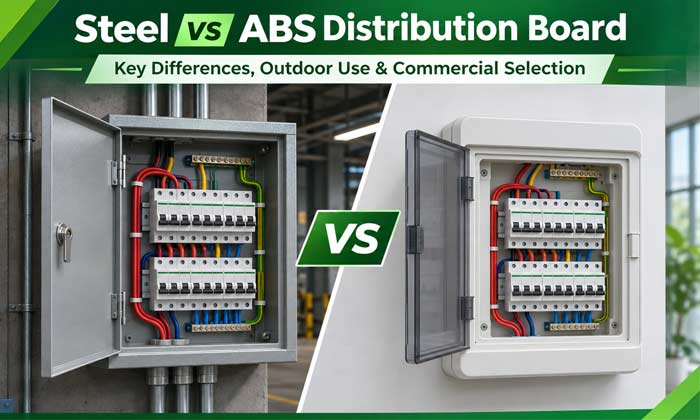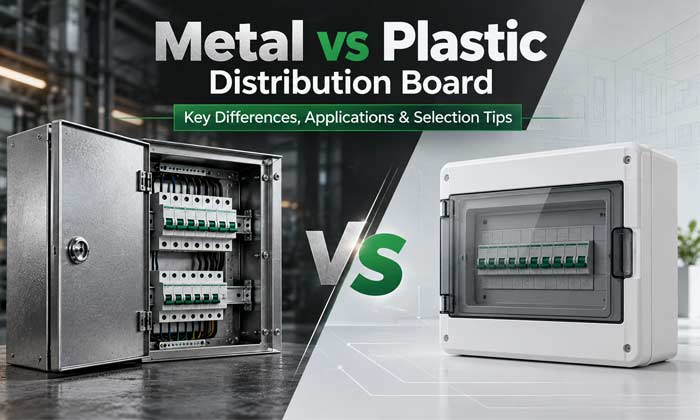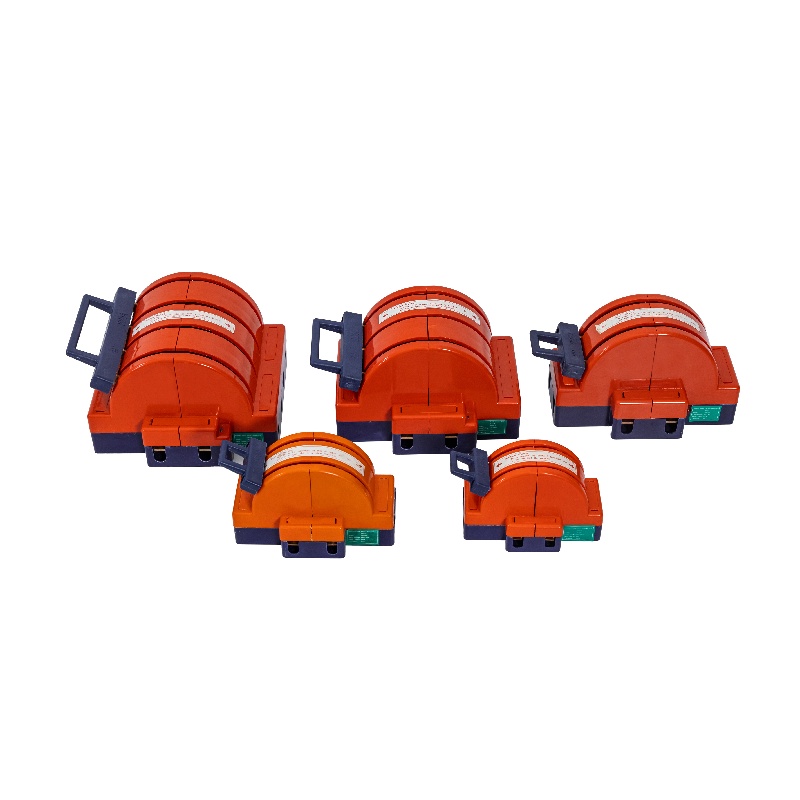
Steel distribution boards offer greater mechanical strength and a non-combustible enclosure, while ABS boards are lighter and resist rust in suitable applications.
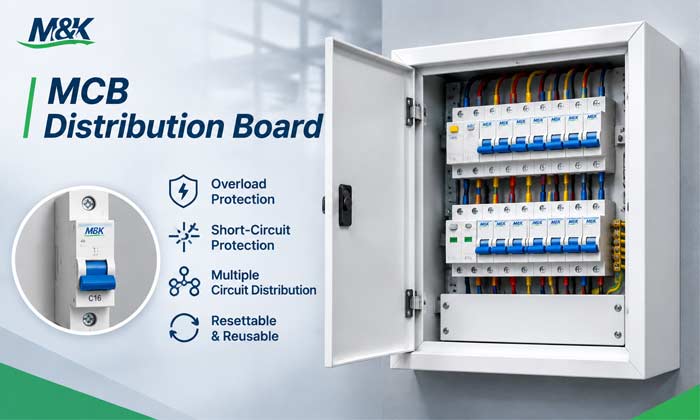
A distribution board houses circuit breakers and other protective devices to distribute electrical power across multiple circuits. The enclosure material plays an important role in protecting internal components from physical damage and environmental exposure.
Steel and ABS are two common materials used in distribution board construction. Steel is often selected for installations requiring mechanical strength and a rigid enclosure, while ABS plastic is preferred for applications where lightweight construction and corrosion resistance are important. Understanding their differences helps contractors, engineers, and buyers select the right distribution board for residential, commercial, and industrial projects.
What Is a Steel Distribution Board?
A steel distribution board is an electrical enclosure made from steel, commonly galvanized steel or stainless steel, designed to house circuit breakers, busbars, terminals, and other electrical components.
Its rigid construction makes it suitable for installations where mechanical protection, structural stability, and long-term durability are important considerations.
Key Advantages of Steel Distribution Boards
- Mechanical Strength: Steel enclosures provide good resistance to impact, deformation, and physical damage, making them suitable for industrial and commercial environments.
- Fire Performance: Steel is non-combustible and does not melt or contribute fuel to a fire like plastic materials. However, fire containment depends on the design and testing of the complete assembly.
- Structural Stability: The rigid construction supports different internal component arrangements and can accommodate demanding enclosure specifications.
- Electromagnetic Shielding: Properly designed and bonded metal enclosures can help reduce electromagnetic interference affecting sensitive electrical equipment.
- Heat Transfer: Steel conducts heat more readily than ABS, although the actual operating temperature also depends on enclosure design, ventilation, electrical loading, and internal component arrangement.
Limitations of Steel Distribution Boards
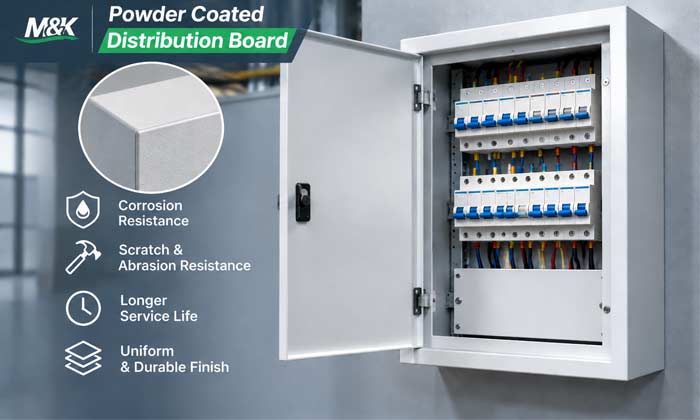
- Corrosion Risk: Carbon steel can rust when its protective coating is damaged or when exposed to moisture, salt, or corrosive substances. Galvanized steel, stainless steel, or suitable protective finishes can help address this issue.
- Weight: Steel enclosures are generally heavier than ABS alternatives and may require stronger mounting support.
- Installation: Cutting, drilling, and modifying steel enclosures can require additional tools and labor.
- Electrical Bonding: Because steel is conductive, appropriate protective earthing and bonding must be provided according to the applicable electrical installation requirements.
What Is an ABS Distribution Board?
An ABS distribution board is an electrical enclosure manufactured from Acrylonitrile Butadiene Styrene (ABS), a thermoplastic material commonly used in electrical housings and equipment enclosures.
ABS is valued for its lightweight construction, electrical insulation, and resistance to rust. These properties make ABS distribution boards suitable for many residential and light commercial applications where heavy-duty metal construction is not necessary.
Key Advantages of ABS Distribution Boards
- Corrosion Resistance: ABS does not rust, making it suitable for humid environments and locations where metal corrosion is a concern. Its chemical resistance still depends on the specific material grade and exposure conditions.
- Lightweight Construction: ABS enclosures are easier to transport, handle, and mount, which can simplify installation.
- Electrical Insulation: ABS is electrically insulating, reducing the risk of the enclosure surface becoming energized through direct electrical contact. Protective conductors and internal earthing terminals are still required where applicable.
- Cost-Effective: ABS distribution boards can offer an economical option for standard electrical installations.
- Design Flexibility: The material can be molded into different enclosure shapes and configurations, allowing manufacturers to produce various sizes and designs.
Limitations of ABS Distribution Boards
- Impact Resistance: ABS may crack or deform under heavy impact, depending on its grade, thickness, and enclosure design.
- Heat Resistance: ABS generally has lower temperature resistance than steel and may soften or deform under excessive heat.
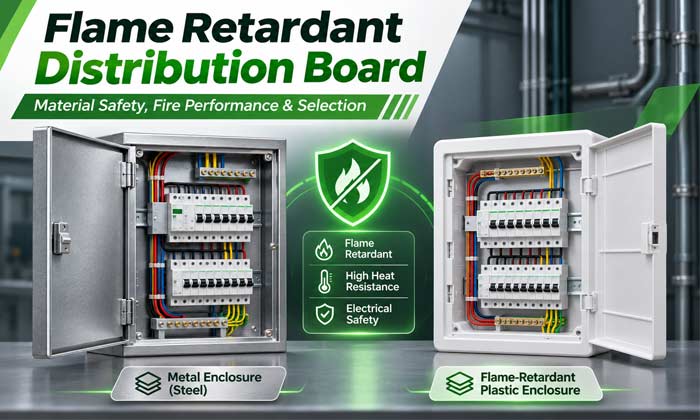
- Fire Performance: Standard ABS is combustible. Flame-retardant grades are available, but their performance must be verified through relevant product testing.
- UV Exposure: Prolonged direct sunlight can cause some ABS materials to discolor, become brittle, or deteriorate. Outdoor applications require suitable UV-resistant materials.
- Electromagnetic Shielding: Standard ABS enclosures provide little inherent electromagnetic shielding compared with properly designed metal enclosures.
Steel Distribution Board vs ABS Distribution Board: What Is the Difference?
The main differences between steel and ABS distribution boards relate to mechanical strength, fire performance, corrosion resistance, weight, and installation requirements. The following comparison summarizes their general characteristics.
| Comparison | Steel Distribution Board | ABS Distribution Board |
|---|---|---|
| Material | Galvanized steel or stainless steel | Acrylonitrile Butadiene Styrene (ABS) |
| Mechanical Strength | High rigidity and good resistance to physical impact | Depends on material grade, thickness, and enclosure design |
| Fire Performance | Non-combustible material | Depends on whether standard or flame-retardant ABS is used |
| Corrosion Resistance | Requires suitable coatings or corrosion-resistant steel grades | Does not rust, but chemical compatibility varies |
| Electrical Properties | Conductive and requires appropriate protective earthing and bonding | Electrically insulating enclosure material |
| Weight | Generally heavier | Generally lighter |
| Installation | May require stronger mounting support and additional tools | Generally easier to handle and install |
| Heat Resistance | Higher resistance to heat deformation | Lower heat resistance than steel |
| Outdoor Suitability | Suitable with appropriate corrosion protection and enclosure design | Suitable with appropriate UV resistance and weather protection |
| Typical Applications | Industrial facilities, commercial buildings, and demanding installations | Residential buildings, offices, and suitable light commercial installations |
Neither material is automatically better in every situation. A steel distribution board is generally preferred when mechanical protection and non-combustible construction are priorities. ABS is often more practical when low weight, corrosion resistance, and ease of installation are more important.
It is also important to distinguish enclosure material from the electrical performance of the complete distribution board. Rated current, voltage, short-circuit capability, temperature rise, and protection against dust and water depend on the overall design and verified specifications, not simply whether the enclosure is made of steel or ABS.
Which Distribution Board Material Is Better for Outdoor Use?
Both steel and ABS distribution boards can be used outdoors, provided the enclosure is specifically designed for the installation environment. The choice depends on exposure to moisture, sunlight, salt, temperature changes, and possible physical damage.
Steel Distribution Boards for Outdoor Applications
Steel distribution boards are suitable for outdoor installations where mechanical strength and structural protection are important. However, ordinary steel can corrode when exposed to rain, humidity, and coastal salt without adequate protection.
For outdoor use, buyers should consider:
- Galvanized steel or stainless steel construction according to the corrosion conditions.
- Suitable protective coatings for exposed metal surfaces.
- Appropriate IP ratings to protect against dust and water ingress.
- Weather-resistant seals, cable glands, and enclosure accessories.
- Secure mounting and suitable protection against physical damage.
ABS Distribution Boards for Outdoor Applications
ABS distribution boards offer an advantage in environments where rust and moisture-related corrosion are concerns. However, standard ABS may deteriorate under prolonged UV exposure and extreme outdoor temperatures.
When selecting ABS distribution boards for outdoor use, check:
- Whether the material is UV-stabilized or otherwise suitable for outdoor exposure.
- Whether the enclosure can withstand the expected operating temperature range.
- Whether the product has an appropriate IP rating for rain and dust exposure.
- Whether the enclosure seals and cable-entry accessories are suitable for outdoor conditions.
- Whether the material provides sufficient impact resistance for the installation location.
For coastal and humid environments, ABS can be a practical alternative to conventional steel because it does not rust. For outdoor locations with frequent physical impact or demanding structural requirements, properly protected steel may be more suitable.
Ultimately, the IP rating, UV resistance, corrosion protection, and complete enclosure design should be evaluated together rather than choosing a material based on one property alone.
Which Distribution Board Material Is Better for Commercial Projects?
Steel distribution boards are often preferred for commercial projects that require durable enclosures, greater mechanical protection, or specific fire-safety characteristics. ABS distribution boards can also be suitable for offices, retail spaces, and other installations with moderate electrical and environmental demands.
The best choice depends on the building type, electrical load, installation location, maintenance requirements, and applicable regulations.
When to Choose Steel for Commercial Projects
- Industrial and Manufacturing Facilities: Steel enclosures are suitable for electrical rooms and production areas where physical protection and structural durability are important.
- Large Commercial Buildings: Office complexes, shopping centers, and commercial facilities may require rigid enclosures to accommodate specific installation and protection requirements.
- High-Traffic Areas: Steel may be preferable in locations where electrical enclosures are exposed to accidental impact or unauthorized physical access.
- Demanding Electrical Installations: Projects with specific enclosure, shielding, or fire-performance requirements may benefit from suitably designed steel distribution boards.
When to Choose ABS for Commercial Projects
- Office Buildings: ABS distribution boards can be suitable for smaller electrical installations where lightweight construction and straightforward mounting are preferred.
- Retail Spaces: Suitable ABS enclosures can be used for lighting, socket circuits, and other standard electrical distribution applications.
- Indoor Utility Areas: ABS offers corrosion resistance in locations where moisture may affect conventional steel enclosures.
- Cost-Sensitive Projects: ABS can be a practical choice for standard installations where its tested performance meets project requirements.
For commercial procurement, enclosure material should not be the only selection criterion. Buyers should also confirm the required number of circuits, rated current, voltage, enclosure dimensions, mounting method, protective devices, and relevant conformity documentation.
How to Choose the Right Distribution Board for Your Project?
Before purchasing a steel or ABS distribution board, consider the following factors to ensure that the selected product matches the installation requirements.
1. Installation Environment
Determine whether the distribution board will be installed indoors, outdoors, in a humid area, or near corrosive substances. The enclosure material and protective features should match the actual operating conditions.
2. Electrical Requirements
Confirm the rated voltage, current, phase configuration, number of outgoing circuits, and required protective devices. The complete distribution board must be suitable for the electrical system and expected load.
3. Mechanical and Fire-Safety Requirements
Consider possible physical impacts, temperature exposure, and project-specific fire-safety requirements. Check relevant product test results rather than assuming that steel or ABS automatically provides a particular level of protection.
4. Enclosure Protection
Review the required IP rating, material resistance, cable-entry design, and sealing arrangements. For outdoor installations, also consider UV exposure, rain, and temperature changes.
5. Standards and Certification
Check the standards applicable to the destination market. The IEC 61439 series covers low-voltage switchgear and controlgear assemblies, with different parts addressing different assembly types and applications. Confirm that the complete distribution board meets the relevant requirements and has appropriate supporting documentation.
6. Installation and Total Cost
Compare the purchase price, transportation, mounting requirements, installation labor, maintenance, and expected service life. A lightweight ABS enclosure may reduce handling costs, while a steel enclosure may be more appropriate where stronger mechanical protection is required.
For wholesale and project procurement, it is also useful to confirm enclosure dimensions, material grade, mounting configuration, number of ways, accessories, labeling, and order quantity before placing an order. Providing drawings or reference specifications can help suppliers identify a suitable configuration.
Need Help Selecting a Distribution Board?
Choosing between steel and ABS distribution boards requires consideration of the installation environment, enclosure protection, electrical specifications, and project requirements. The right material should provide the necessary protection while meeting practical installation and budget considerations.
M&K offers distribution board options for different electrical installation requirements. If you have questions about product specifications, enclosure materials, configurations, or sourcing requirements, feel free to contact M&K to discuss your project.