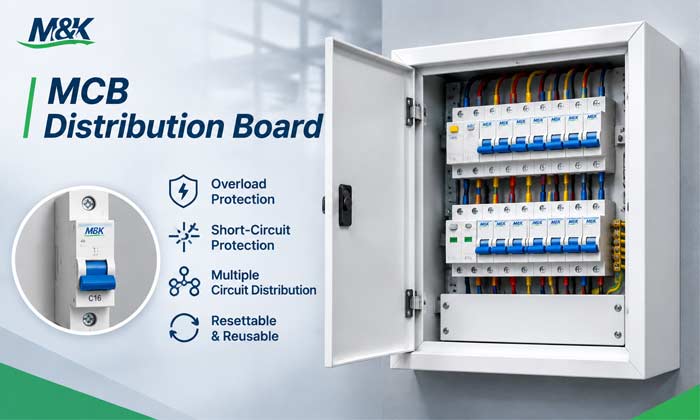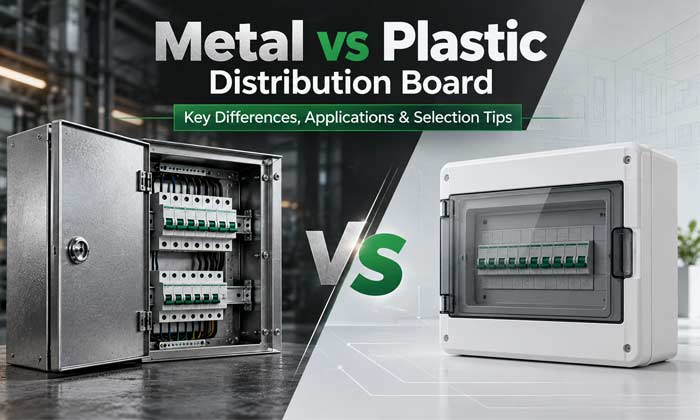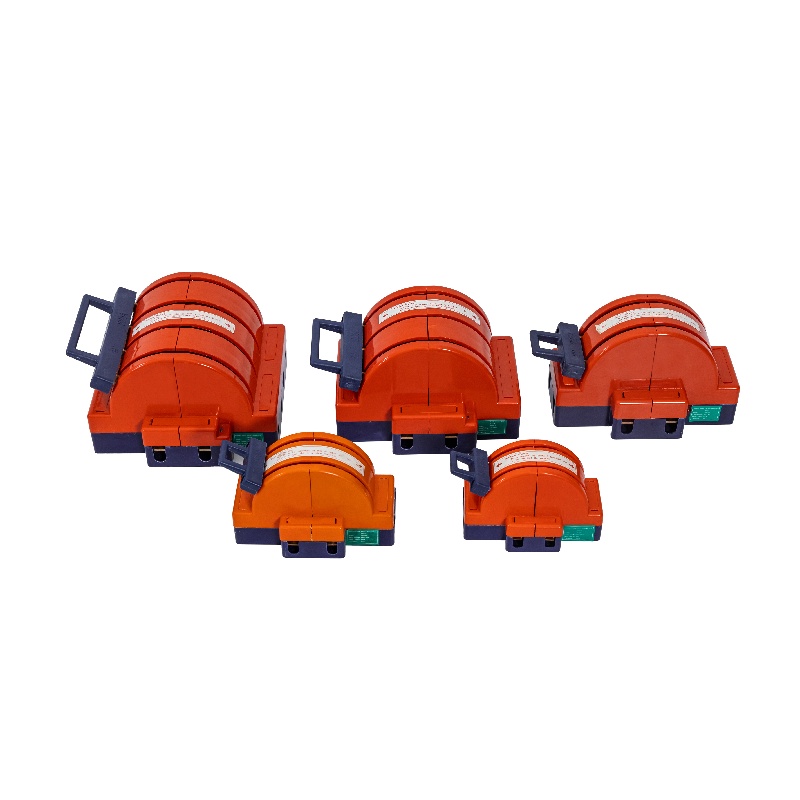
An MCB distribution board divides incoming power into branch circuits and uses miniature circuit breakers to protect each circuit against overloads and short circuits.
An MCB distribution board is a key part of a building’s electrical distribution system. It receives power from the incoming supply and distributes it to individual circuits through a series of protective devices. Each circuit can be switched off automatically when an electrical fault occurs, helping protect wiring and connected equipment.
MCB distribution boards are commonly used in residential buildings, offices, commercial facilities, and light industrial installations. Their configurations vary according to the electrical load, number of circuits, installation environment, and required protection devices.
What Components Are Included in an MCB Distribution Board?
An MCB distribution board consists of an enclosure and several electrical components that work together to distribute power and provide circuit protection. The exact configuration depends on the application and electrical system.
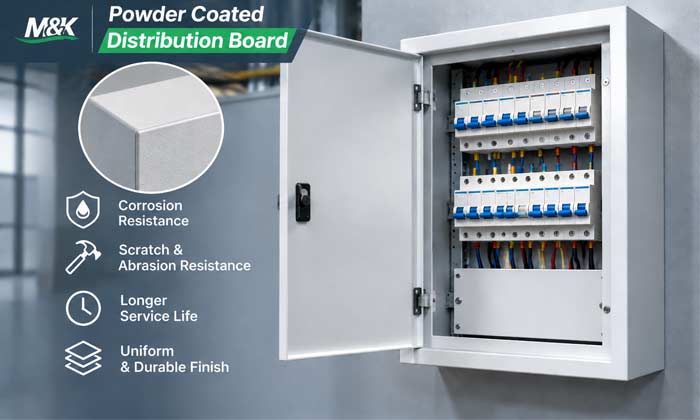
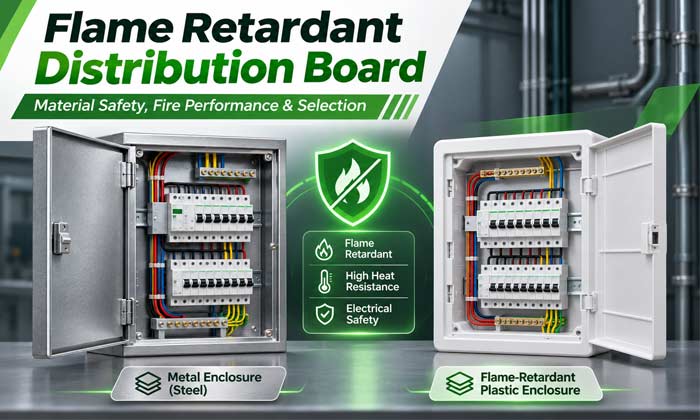
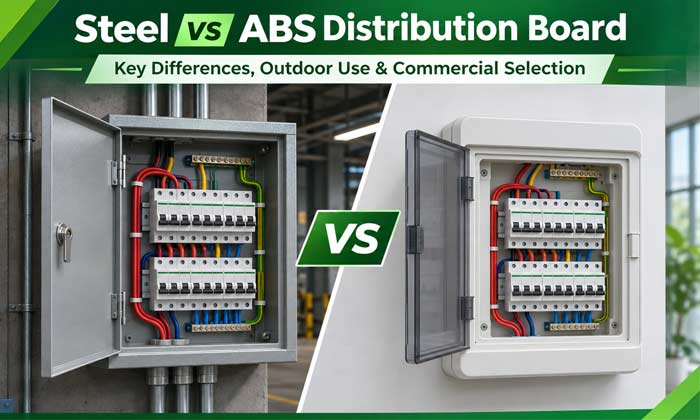
- Enclosure: The outer housing protects internal electrical components from physical contact and environmental exposure. Common materials include metal and engineering plastics.
- Main Switch or Isolator: Provides a means of disconnecting the incoming power supply to the distribution board for maintenance or other operational requirements.
- Busbar: Distributes incoming electrical power to individual MCBs through conductive connections.
- Miniature Circuit Breakers (MCBs): Protect individual branch circuits against overloads and short circuits by automatically interrupting excessive current.
- Neutral Terminal Bar: Provides connection points for neutral conductors from the outgoing circuits, according to the system configuration.
- Earth Terminal Bar: Provides connection points for protective conductors to support the required earthing arrangement.
- Additional Protection Devices: Depending on the application, the board may also include RCDs, RCCBs, RCBOs, and surge protection devices (SPDs).
These components must be correctly selected and arranged to match the electrical system. For example, the number of MCBs depends on how many independent circuits need protection, while the busbar and incoming connection must be suitable for the board’s rated current.
What Is an MCB in a Distribution Board?
MCB stands for Miniature Circuit Breaker. It is an automatically operated electrical switching device designed to interrupt current when an overload or short circuit occurs.
Unlike a traditional fuse, which must generally be replaced after operating, an MCB can be manually reset after the fault has been identified and cleared. This makes it convenient for electrical installations that require independent circuit protection and straightforward maintenance.
How Does an MCB Work?
An MCB generally uses two operating mechanisms to detect different types of overcurrent:
- Thermal Protection: A bimetallic strip inside the MCB heats up and bends when excessive current flows for an extended period. Once the operating threshold is reached, the mechanism trips and disconnects the circuit. This provides overload protection.
- Magnetic Protection: An electromagnetic coil responds to a high current increase during a short circuit. It activates the tripping mechanism rapidly to interrupt the fault current.
After the MCB trips, its contacts separate and the internal arc-control system helps extinguish the electrical arc. The affected circuit remains disconnected until the fault is investigated and the breaker is reset.
These two mechanisms allow an MCB to respond to both sustained overcurrent and sudden high-current faults, making it an important protective component in a distribution board.
How Does an MCB Protect a Distribution Board?
MCBs primarily protect the individual circuits connected to a distribution board rather than the enclosure itself. By interrupting abnormal current conditions, they help prevent excessive heating of conductors and reduce the risk of damage to electrical components.
1. Overload Protection
An overload occurs when a circuit carries more current than its designed capacity for an extended period. This can happen when too many electrical appliances operate on the same circuit or when connected equipment draws excessive current.
Continuous overloading can cause wiring and electrical connections to overheat. The MCB’s thermal mechanism detects the sustained excess current and trips the circuit when its operating characteristics are reached.
2. Short-Circuit Protection
A short circuit occurs when conductors at different electrical potentials make an unintended low-impedance connection. This can produce a very high current that may damage wiring, electrical equipment, and connections.
The magnetic mechanism inside the MCB responds to the high fault current and rapidly disconnects the affected circuit, helping limit the potential damage.
3. Independent Circuit Protection
An MCB distribution board generally assigns separate breakers to different branch circuits, such as lighting, socket outlets, air conditioning, and other electrical loads.
If one circuit develops an overcurrent fault, its corresponding MCB can trip without necessarily disconnecting every other circuit in the building. This makes fault identification and maintenance more manageable.
What an MCB Cannot Protect Against
Although MCBs provide essential overcurrent protection, they do not cover every electrical hazard. Other protective devices may be required depending on the installation:
- RCD or RCCB: Detects residual current caused by current leakage and provides additional protection against certain electric shock and earth-fault hazards. A standard RCCB does not provide overload or short-circuit protection by itself.
- RCBO: Combines residual-current protection with overcurrent protection, providing both functions in one device.
- SPD: Helps protect electrical equipment against transient overvoltages caused by events such as lightning or switching operations.
These devices perform different functions and may be installed together in an MCB distribution board to provide more comprehensive electrical protection.
What Types of MCB Are Used in a Distribution Board?
MCBs are available with different tripping characteristics to accommodate circuits with different operating loads and starting currents. The most common types under IEC/EN 60898-1 are B, C, and D.
| MCB Type | Magnetic Tripping Range | Typical Applications |
|---|---|---|
| Type B | 3–5 times rated current | Lighting circuits, resistive loads, and circuits with relatively low inrush current. |
| Type C | 5–10 times rated current | General-purpose circuits and loads with moderate starting currents, including some inductive equipment. |
| Type D | 10–20 times rated current | Circuits supplying equipment with high inrush currents, such as certain transformers and motor-related loads. |
These ranges describe the instantaneous magnetic tripping characteristics for AC applications under the relevant standard. Actual operating behavior also depends on the breaker model and its time-current characteristics.
Choosing an MCB type should not be based solely on whether the installation is residential, commercial, or industrial. The connected load, starting current, cable characteristics, prospective short-circuit current, and required disconnection time must all be considered.
How to Select the Right MCB Rating?
In addition to the tripping curve, an MCB must have suitable electrical ratings for the circuit it protects. Important considerations include:
- Rated Current: The breaker rating must be coordinated with the cable’s current-carrying capacity and the expected circuit load.
- Rated Voltage: The MCB must be suitable for the operating voltage and electrical system.
- Breaking Capacity: The rated short-circuit breaking capacity must be sufficient for the prospective fault current at the installation point, considering any applicable backup protection arrangement.
- Number of Poles: Select the appropriate pole configuration according to the circuit and supply arrangement.
- Tripping Characteristics: Choose a B, C, or D curve according to the load’s inrush current and the required protection coordination.
For household and similar AC installations, IEC 60898-1 is a commonly applicable standard for MCBs. Other applications may require circuit breakers designed and assessed under IEC 60947-2 or other relevant local requirements.
When Should You Use an MCB Distribution Board?
An MCB distribution board is suitable for electrical installations that require power to be divided into multiple branch circuits, with individual overcurrent protection for each circuit.
Residential Buildings
In residential properties, MCB distribution boards are commonly used to distribute electricity to different areas and electrical loads, including:
- Indoor and outdoor lighting circuits.
- General socket outlet circuits.
- Kitchen appliances and dedicated appliance circuits.
- Air conditioning and other household equipment.
- Water heaters and other fixed electrical loads.
Separating these loads into individual circuits helps limit the impact of a fault and makes electrical maintenance easier.
Commercial Buildings
Offices, retail stores, hotels, and other commercial facilities often use MCB distribution boards to manage power across different rooms, floors, and functional areas.
Typical applications include lighting systems, office socket circuits, display equipment, small air conditioning systems, and general electrical distribution. Larger commercial installations may use multiple distribution boards connected to an upstream power distribution system.
Light Industrial Facilities
MCB distribution boards can also serve as sub-distribution panels in workshops, small production facilities, and other light industrial environments.
They can distribute power to lighting, general-purpose sockets, control circuits, and selected equipment circuits where the electrical ratings and fault protection requirements are within the MCB’s capabilities.
For larger motors, high-current equipment, or installations with higher prospective fault currents, MCCBs or other suitable protective devices may be more appropriate. The final choice depends on the electrical design and protection coordination requirements.
How to Choose the Right MCB Distribution Board?
Selecting an MCB distribution board requires more than checking the number of breakers it can accommodate. The board must match the electrical system, connected loads, installation environment, and future expansion requirements.
- Number of Circuits: Determine how many outgoing circuits are required and whether additional ways should be reserved for future expansion.
- Rated Current and Voltage: Confirm the incoming supply ratings and the board’s capacity to accommodate the expected electrical load.
- MCB Configuration: Select appropriate breaker ratings, pole configurations, and tripping characteristics for individual circuits.
- Enclosure Material: Choose a suitable metal or insulating plastic enclosure according to mechanical protection, environmental conditions, and project requirements.
- Installation Method: Check whether a surface-mounted or flush-mounted design is more suitable for the available installation space.
- Protection Requirements: Determine whether additional RCDs, RCBOs, SPDs, or other protective devices are required.
- Standards and Documentation: Verify the applicable product standards, electrical ratings, and conformity documentation for the intended market.
For wholesale and project procurement, it is also useful to confirm enclosure dimensions, busbar configuration, number of ways, accessories, labeling, and order quantity before placing an order. Providing electrical drawings or reference specifications can help suppliers identify a suitable distribution board configuration.
Installation, inspection, and testing should be performed by qualified electrical personnel in accordance with the manufacturer’s instructions and local electrical regulations.
Need More Information About MCB Distribution Boards?
Selecting an MCB distribution board involves matching the circuit protection devices, electrical ratings, enclosure configuration, and installation requirements. Understanding how MCBs work and what each protective device does can help you make a more suitable choice for your electrical project.
M&K provides distribution board options for different electrical installation requirements. If you need further information about MCB configurations, enclosure specifications, circuit arrangements, or product sourcing, feel free to contact our team to discuss your requirements.