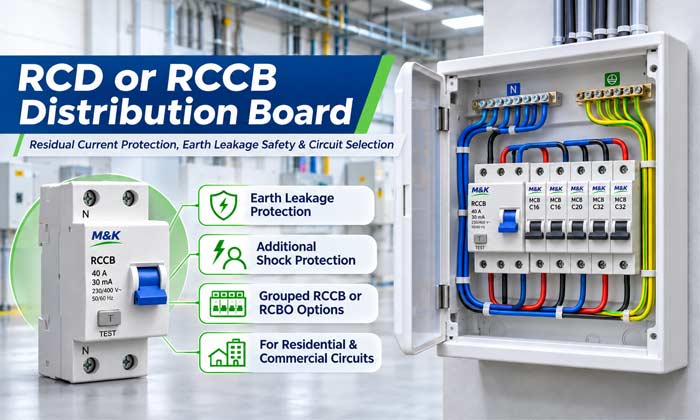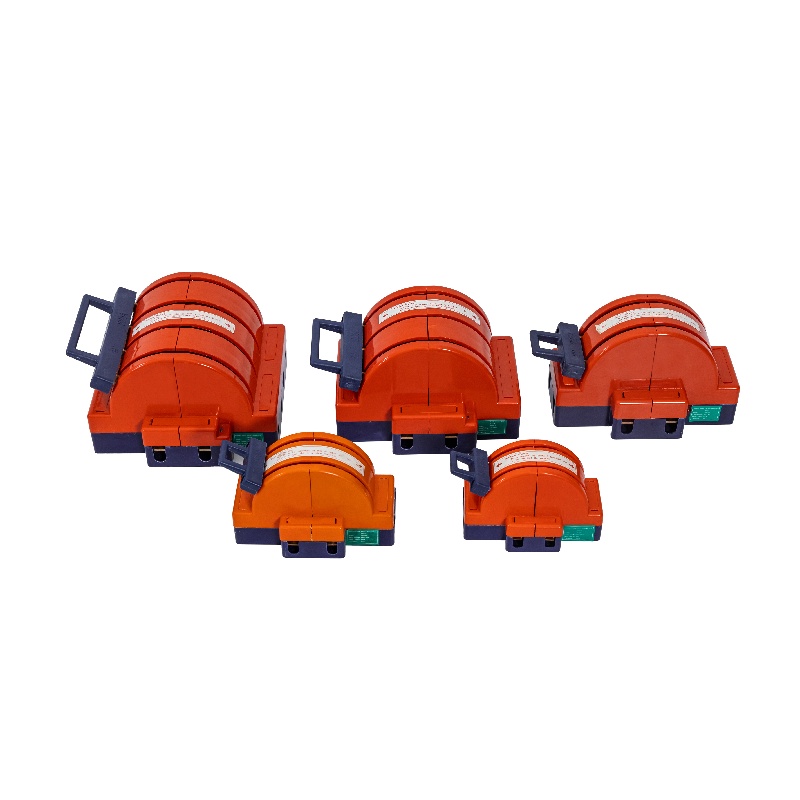
An RCD or RCCB distribution board distributes electrical power through multiple circuits and uses residual current protection to detect leakage faults and disconnect affected circuits.
Unlike a standard distribution board that relies only on overcurrent protective devices, an RCD-equipped board includes protection against certain earth leakage faults. This helps reduce electric shock risks and the possibility of fires caused by earth-fault currents.
RCD and RCCB distribution boards are used in residential buildings, commercial properties, and industrial facilities. Their configurations depend on the number of circuits, electrical loads, installation conditions, and applicable safety requirements.
What Is an RCD Distribution Board?
An RCD distribution board is an electrical distribution panel equipped with one or more Residual Current Devices (RCDs). These devices monitor the balance of current flowing through a circuit and disconnect the supply when a residual current fault reaches the device’s operating threshold.
The distribution board receives electrical power from an incoming supply and distributes it through protective devices to individual branch circuits. Depending on its configuration, an RCD may protect several circuits together, or individual circuits may have their own residual current protection.
What Components Are Included?
A typical RCD distribution board may contain the following components:
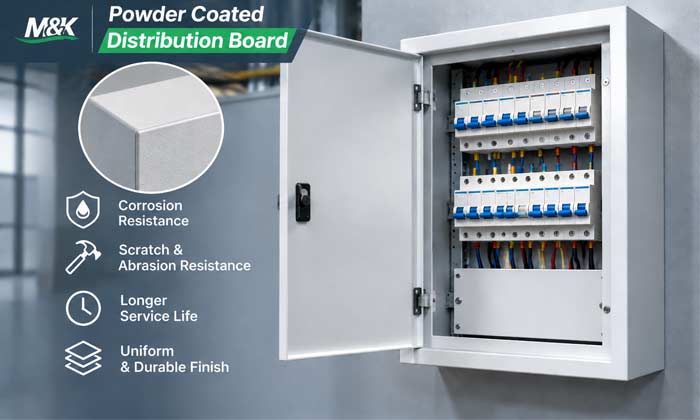
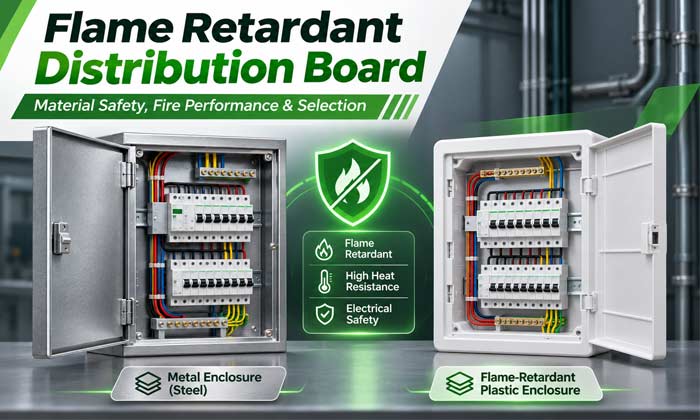
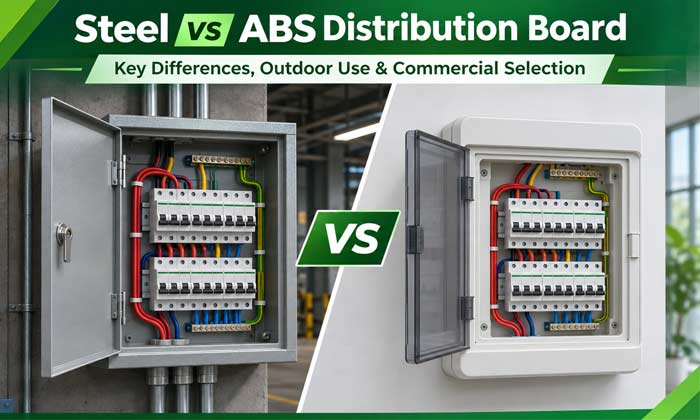
- Enclosure: A metal or insulating plastic housing that contains the electrical components and provides protection against physical contact and environmental exposure.
- Main Switch: Provides a means of disconnecting the incoming supply for isolation and maintenance.
- Busbars: Distribute electrical power to the outgoing protective devices.
- RCDs or RCCBs: Detect residual current faults and disconnect the circuits they protect.
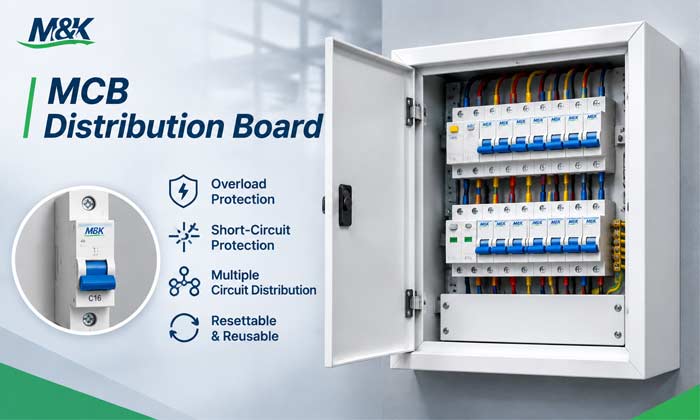
- MCBs: Provide overload and short-circuit protection for individual circuits.
- RCBOs: Combine residual current protection with overload and short-circuit protection in one device.
- Neutral and Earth Terminals: Provide the required connections for neutral and protective conductors according to the board’s electrical design.
- Surge Protection Devices: May be included to help protect equipment against transient overvoltages.
Not every distribution board contains all these devices. The final arrangement must match the electrical installation and the protection functions required for each circuit.
What Is an RCCB in a Distribution Board?
RCCB stands for Residual Current Circuit Breaker. It is a type of RCD designed to detect residual current and automatically disconnect the supply when the imbalance reaches its specified operating level.
An RCCB is commonly installed within a distribution board to provide residual current protection for one or more outgoing circuits.
One important limitation is that a standard RCCB does not provide overload or short-circuit protection. It must be used with suitable overcurrent protective devices, such as MCBs, according to the electrical design.
How Does an RCCB Work?
An RCCB monitors the electrical current passing through the live conductors of a protected circuit. In normal operation, the total current flowing into and returning from the circuit is balanced.
If insulation damage or another fault creates an unintended current path, some current may flow outside the normal circuit conductors. This produces a residual current that the RCCB can detect.
The protection process generally follows these steps:
- Current Monitoring: The RCCB continuously monitors the current balance through the conductors passing through its sensing mechanism.
- Fault Detection: A current imbalance develops when part of the current flows through an unintended path.
- Automatic Tripping: When the residual current reaches the device’s operating conditions, the RCCB activates its tripping mechanism.
- Power Disconnection: The device opens the protected circuit, helping reduce the duration of exposure to the fault.
For example, if damaged insulation allows current to flow from a live conductor to an earthed metal appliance housing, a suitable RCCB can detect the resulting imbalance and disconnect the supply.
However, an RCCB cannot detect every dangerous electrical condition. Contact between live and neutral conductors may not create a residual current imbalance, and certain shock hazards can remain even when an RCD is installed.
What Does a 30 mA RCCB Mean?
A 30 mA RCCB has a rated residual operating current of 30 milliamperes. Devices with a rated residual operating current not exceeding 30 mA are commonly used to provide additional protection against electric shock in applicable installations.
The 30 mA value describes the device’s residual current sensitivity, not its normal load current rating or short-circuit breaking capacity.
RCCBs with other residual current ratings, such as 100 mA or 300 mA, may be used for different protective functions where permitted by the electrical design and applicable regulations. These higher ratings should not be treated as equivalent to 30 mA additional shock protection.
RCD vs RCCB Distribution Board: What Is the Difference?
RCD is the general term for a residual current protective device, while RCCB refers to a specific type of RCD without integral overcurrent protection. Therefore, an RCCB is an RCD, but not every RCD is an RCCB.
In everyday electrical terminology, RCD distribution board and RCCB distribution board are sometimes used interchangeably. Technically, the distinction depends on which protective devices are installed.
| Comparison | RCD | RCCB |
|---|---|---|
| Full Name | Residual Current Device | Residual Current Circuit Breaker |
| Definition | General category of residual current protective devices | A specific residual current circuit breaker |
| Residual Current Protection | Yes, according to device type and rating | Yes |
| Overload Protection | Depends on the device type | No integral overload protection |
| Short-Circuit Protection | Depends on the device type | No integral short-circuit protection |
| Common Examples | RCCB, RCBO, and other residual current protective devices | Standalone RCCB |
| Distribution Board Application | General residual current protection arrangements | Residual current protection combined with suitable overcurrent protective devices |
For product selection, it is more useful to identify the exact device type, residual current rating, and protection functions than to rely only on the general term RCD.
RCCB vs RCBO vs MCB: Which Distribution Board Protection Device Do You Need?
MCBs, RCCBs, and RCBOs perform different protection functions within a distribution board. Understanding these differences is important because residual current protection and overcurrent protection address different electrical hazards.
| Protection Function | MCB | RCCB | RCBO |
|---|---|---|---|
| Overload Protection | Yes | No | Yes |
| Short-Circuit Protection | Yes | No | Yes |
| Residual Current Protection | No | Yes | Yes |
| Typical Function | Protects circuits against overcurrent | Detects residual current faults | Combines overcurrent and residual current protection |
RCCB with MCBs
One common distribution board arrangement uses an RCCB to provide residual current protection for a group of circuits, with separate MCBs protecting those circuits against overloads and short circuits.
This arrangement can provide the required protection functions while allowing multiple outgoing circuits to share an RCCB.
However, a residual current fault on one protected circuit may cause the shared RCCB to disconnect all circuits connected to it. This can interrupt power to equipment unrelated to the original fault.
Individual RCBO Protection
An alternative arrangement uses individual RCBOs for outgoing circuits. Each RCBO provides both residual current and overcurrent protection for its assigned circuit.
Individual RCBOs can improve circuit separation because a fault detected by one RCBO does not normally require other independently protected circuits to disconnect.
This configuration can be useful in installations where limiting unnecessary power interruptions and simplifying fault identification are important.
The choice between grouped RCCBs and individual RCBOs depends on project requirements, installation design, available space, protection coordination, and budget.
When Should You Use RCD Protection in a Distribution Board?
RCD protection is used where the electrical installation requires additional protection against electric shock or suitable fault protection through residual current detection. The exact requirements vary by circuit type, installation environment, earthing arrangement, and local electrical regulations.
Residential Distribution Boards
RCD protection is widely used in residential electrical installations, particularly for circuits supplying socket outlets, lighting, bathrooms, kitchens, and outdoor equipment where required by applicable regulations.
Typical applications include:
- General socket outlet circuits.
- Bathroom electrical circuits and equipment.
- Kitchen appliances and associated circuits.
- Outdoor sockets and garden equipment.
- Lighting circuits where additional residual current protection is required.
In many residential applications, 30 mA RCD protection is used for additional protection against electric shock. The required coverage must be determined according to the electrical regulations applicable to the installation.
Commercial Distribution Boards
Commercial buildings often contain numerous electrical circuits supplying office equipment, lighting, socket outlets, and building services.
RCD protection may be required for certain circuits or equipment depending on the installation requirements. Distribution boards may use grouped RCCBs or individual RCBOs according to the desired level of circuit separation.
For example, separating important office equipment circuits from general-purpose socket circuits can help reduce the effect of residual current faults on unrelated loads.
Industrial Distribution Boards
Industrial installations may require residual current protection for selected circuits supplying portable equipment, maintenance sockets, control systems, or machinery.
However, equipment containing variable-frequency drives, power electronic converters, or other electronic components may produce residual currents with characteristics different from ordinary sinusoidal AC leakage.
In these situations, the correct RCD type must be selected according to the equipment characteristics and applicable standards. Using an unsuitable RCD type can result in incorrect operation or failure to detect certain residual currents.
Outdoor and Special Electrical Installations
RCD protection is also important in many outdoor and special installations where electrical equipment may be exposed to moisture, conductive surroundings, or increased electric shock risks.
Examples include:
- Outdoor socket outlets and portable equipment circuits.
- Construction-site electrical installations.
- Selected agricultural and horticultural installations.
- Electric vehicle charging equipment.
- Other special locations where residual current protection is required.
The required RCD sensitivity, type, and circuit arrangement must be determined from the relevant electrical regulations and equipment specifications.
What Types of RCD Are Used in Distribution Boards?
RCDs are available in different types according to the residual current waveforms they are designed to detect. Selecting the correct type is especially important when circuits supply modern electronic equipment.
| RCD Type | Residual Current Detection | Typical Considerations |
|---|---|---|
| Type AC | Sinusoidal alternating residual current | Limited to suitable AC applications where permitted by applicable regulations. |
| Type A | Sinusoidal AC and pulsating DC residual currents | Commonly relevant to circuits supplying electronic appliances with rectifier components. |
| Type F | Type A characteristics plus specified composite residual currents and frequency-related conditions | May be suitable for certain single-phase variable-speed equipment applications. |
| Type B | AC, pulsating DC, and smooth DC residual currents within its specified operating characteristics | May be required for selected inverter, charging, or power-conversion applications. |
These device types should not be confused with the B, C, and D tripping curves used to classify the instantaneous overcurrent characteristics of MCBs.
For example, an MCB with a Type C tripping curve and an RCD with Type A residual current characteristics describe two different protection properties.
Equipment manufacturers may specify the required RCD type. For installations involving electronic drives, EV chargers, or equipment capable of producing DC residual currents, the manufacturer’s instructions and applicable standards should be checked before choosing the device.
How to Choose an RCD or RCCB Distribution Board?
Selecting a suitable RCD or RCCB distribution board requires consideration of the electrical system, circuit arrangement, residual current characteristics, and installation conditions.
1. Confirm Electrical Ratings
Check the distribution board’s rated voltage, current, phase configuration, and number of outgoing circuits. The protective devices and busbar system must be suitable for the electrical supply and connected loads.
2. Select the Residual Current Rating
Choose the rated residual operating current according to the protection function required. A 30 mA device is commonly used for additional electric shock protection, while other sensitivities may be appropriate for different protective functions.
The selection must comply with applicable electrical regulations and the overall protection design.
3. Choose the Appropriate RCD Type
Determine whether the circuits require Type AC, A, F, or B protection based on the expected residual current waveforms and connected equipment.
Modern electronic equipment may require a type capable of detecting residual current components that a basic Type AC device is not designed to detect.
4. Decide Between RCCBs and RCBOs
Consider whether several circuits should share an RCCB or whether individual RCBO protection is more suitable.
Individual RCBOs can help limit circuit interruptions, while grouped RCCB arrangements may be appropriate when supported by the electrical design and project requirements.
5. Check Protection Coordination and Neutral Connections
Ensure that upstream and downstream protective devices are correctly coordinated. Where multiple RCDs are installed, their arrangement should avoid unnecessary tripping and meet applicable selectivity requirements.
Neutral conductors must also be connected according to the intended protective device arrangement. Incorrectly shared or cross-connected neutrals between separately protected circuits can cause unwanted tripping and unsafe operating conditions.
6. Verify Enclosure and Installation Requirements
Select an enclosure material and mounting method suitable for the installation environment. Check the required IP rating, available internal space, cable entry arrangements, and accessibility for inspection and maintenance.
7. Review Standards and Documentation
Relevant international standards include IEC 61008-1 for residual current circuit breakers without integral overcurrent protection and IEC 61009-1 for residual current circuit breakers with integral overcurrent protection. IEC 62423 provides additional requirements for Type F and Type B devices within its scope.
For the complete distribution board, the applicable IEC 61439 requirements and local electrical regulations should also be considered.
When sourcing distribution boards for commercial or industrial projects, confirm the device configuration, rated current, residual current sensitivity, enclosure dimensions, number of ways, and supporting conformity documentation before ordering.
How Do You Maintain and Test an RCD Distribution Board?
RCD protection must remain functional throughout the installation’s service life. Routine inspection and testing help identify device failures, connection problems, and other conditions affecting electrical safety.
- Test Button: Operate the RCD’s built-in test button at the intervals specified by the manufacturer or applicable regulations. The test button checks the device’s internal test function but does not replace full electrical verification.
- Visual Inspection: Check the distribution board for signs of overheating, damaged components, moisture ingress, and loose or deteriorated connections.
- Functional Verification: Qualified electrical personnel should perform appropriate RCD testing using suitable instruments and procedures.
- Fault Investigation: Repeated tripping should be investigated rather than ignored. Possible causes include insulation faults, leakage from connected equipment, wiring errors, and accumulated residual currents.
- Documentation: Maintain relevant inspection and testing records according to the installation’s maintenance requirements.
An RCD that fails to operate correctly must be assessed by qualified electrical personnel. It should not be bypassed or repeatedly reset without identifying the cause of the problem.
Need Help Choosing an RCD or RCCB Distribution Board?
An RCD or RCCB distribution board provides residual current protection as part of a properly designed electrical distribution system. The correct device arrangement depends on the required protection functions, circuit configuration, connected loads, and applicable electrical standards.
M&K provides distribution board options for different electrical installation requirements. If you have questions about RCCB and RCBO configurations, residual current ratings, enclosure specifications, or product sourcing, contact our team to discuss your project requirements.